
Sustainable
What is the best way to tackle plastic waste?
By Seb Beloe
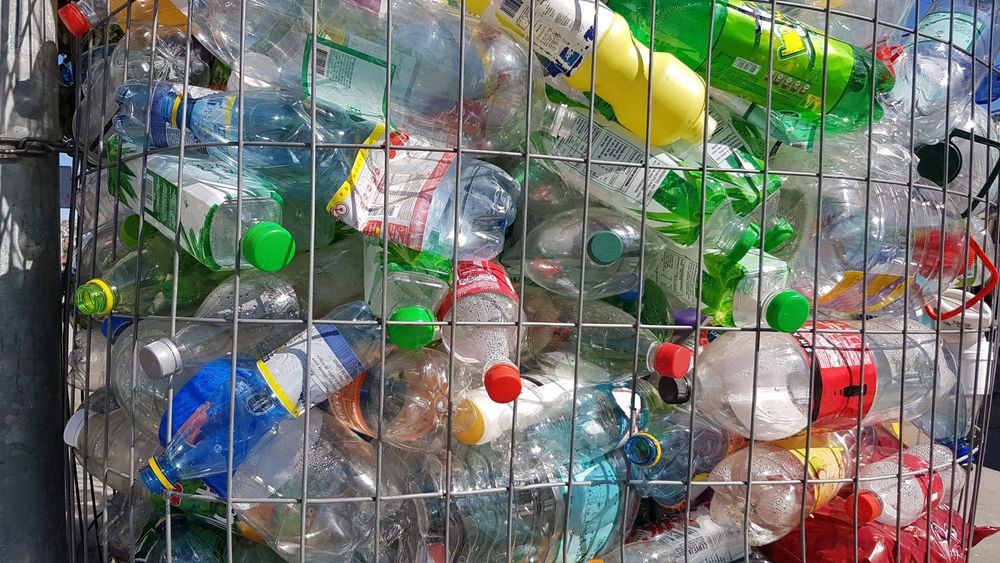
A look at the limits of plastics recycling, the regulation and materials being tried in response, and why we favour recycled cardboard instead.
Love them, or hate them, Greenpeace knows how to produce a good campaign video. Personally, I love them, but even for me, their ‘KitKat video’ was quite hard to watch.¹ It stars the British Prime Minister and illustrates the huge challenge in reducing plastic waste.²
Recycling plastic is difficult.
As an Environmental Science undergraduate in the mid-1990s, I wrote my thesis on ways to recycle high-density polyethylene (HDPE) that is used to make laundry detergent bottles. The best we could do back then was recycling the material into toilet and shower cubicles. Depressingly, plastics recycling has hardly advanced since then.³ Some countries are better than others, of course. But as the Greenpeace video makes clear, even where waste plastic is collected, it is not always recycled.
The petrochemical industry meanwhile still plans for continued growth. But there is now significant momentum behind efforts to reduce plastic use, particularly in packaging. The ‘Global Commitment’, for example, is supported by 118 businesses that produce, use and recycle large volumes of plastic.⁴ In 2019, 65% of these signatories had committed to ensuring that 100% of their plastic packaging is reusable, recyclable or compostable by 2025. Being recyclable is one thing, being recycled is another. So far, only 1.9% of their plastic packaging is composed of recycled material.
New momentum in reducing plastic waste.
Makers of virgin fossil plastics should not, in our view, take too much comfort from this slow progress. 56% of those same Global Commitment signatories are now actively involved in recycling pilot projects.⁵
Moreover, regulatory activity is also accelerating. The European Union has policies to reduce the amount of single-use plastic, such as bans on plastic straws, cutlery, stirrers, etc. In addition, a new plastics tax of €0.80/kg on non-recycled plastic packaging was introduced on 1st of January 2021. This regulation is expected to lead to an increase in recycled plastic packaging across the EU. Similar proposals are being mooted in other jurisdictions as well.
Are the ‘solutions’ solving the problem?
Industry is now busy experimenting with different techniques to reduce plastic waste. Some are familiar such as mechanical sorting and recycling. Others, such as chemical recycling, involve returning polymers to their base chemicals before reformulating them into new material. Novel plastic materials are also being explored. Some of these, such as polylactic Acid-based polymers (‘PLA’) and polyhydroxyalkanoates (‘PHA’) can be derived from biomass. There are even businesses developing additives which help traditional fossil-based plastics biodegrade in the natural environment.⁶
Each of these approaches brings different strengths and weaknesses. For all of them, however, a healthy dose of skepticism is advised. This situation is made worse by a lack of clear standards and the complexity of the issues. PLA for example can be manufactured from biomass and is compostable in industrial facilities. However, it takes decades to break-down in home composting facilities and like traditional plastics, takes centuries to break-down in the ocean. PHA meanwhile is home compostable but is still subject to heated debate on whether it is marine biodegradable.
Both PLA and PHA can contaminate otherwise recyclable waste streams. For this reason, many are reluctant to embrace them. For example, Tesco has now formally removed PLA from its preferred material list.
Our approach
Plastic pollution remains a major environmental concern and may pose significant risks to human health.⁷ At Guinness we remain intensely interested in potential solutions to this problem. We have researched companies that make bioplastics, as well as compostable plastics and chemical recyclers.
So far though we are not convinced that any of these offer a sustainable long-term solution to the problem of plastic waste and microplastics in the environment. Instead, through our investment in Smurfit Kappa, we remain committed to recycled cardboard, an inherently biodegradable and compostable material that is also easily recycled. Cardboard is not appropriate for every application, but new design innovations mean that it has become the most popular alternative material for companies committed to reducing plastic waste.
Over 40% of the companies signed up to the Global Commitment have opted to use recycled cardboard in preference to plastic.⁸ We continue to research what the other 60% are doing and remain ready to invest in companies where we have conviction in the environmental integrity of the solution and the quality of the business model.
² https://www.greenpeace.org.uk/news/wasteminster-downing-street-disaster/
³ https://cen.acs.org/environment/recycling/Plastic-problem-chemical-recycling-solution/97/i39
⁴ https://www.newplasticseconomy.org/assets/doc/Global-Commitment-2020-Progress-Report.pdf
⁵ Ibid.
⁶ For example see https://www.polymateria.com/
⁷ Among other health impacts, a recent study has suggested microplastics represent a threat to male fertility (https://www.ncbi.nlm.nih.gov/pmc/articles/PMC7967748/)
⁸ Op. Cit. iv
Risk: The WHEB Environmental Impact Fund, the WHEB Sustainable Impact Fund and the FP WHEB Sustainability Impact Fund are Equity funds. Investors should be willing and able to assume the risks of equity investing. The value of an investment and the income from it can fall as well as rise as a result of market and currency movement; you may not get back the amount originally invested.
This is marketing communication. Please refer to the prospectus, supplement and KIID/KID for the funds, which contain full information on the risks and detailed information on their characteristics and objectives, before making any final investment decisions.
Disclaimer: This insight may provide information about Fund portfolios, including recent activity and performance and may contain facts relating to equity markets and our own interpretation. Any investment decision should take account of the subjectivity of the comments contained in this insight. This insight is provided for information only and all the information contained in it is believed to be reliable but may be inaccurate or incomplete; any opinions stated are honestly held at the time of writing but are not guaranteed. The contents of this insight should not therefore be relied upon. It should not be taken as a recommendation to make an investment in the Funds or to buy or sell individual securities, nor does it constitute an offer for sale.