Sustainable
The next constraint on AI is not just energy, it's also water
By Ty Lee
Why the water footprint of artificial intelligence sits largely upstream, in chip fabrication and power generation, rather than in data centre cooling.
This summer has underscored a simple but sobering reality: nearly two-thirds of the world’s population now faces severe water stress annually and global demand could outstrip supply by 2030. Water scarcity is no longer a distant environmental issue; it is an economic constraint today.
What is less recognised is that a major new source of water demand may come not from agriculture or heavy industry, but from digital infrastructure, particularly artificial intelligence. Public debate has primarily focused on data centre cooling. The bigger story lies elsewhere.
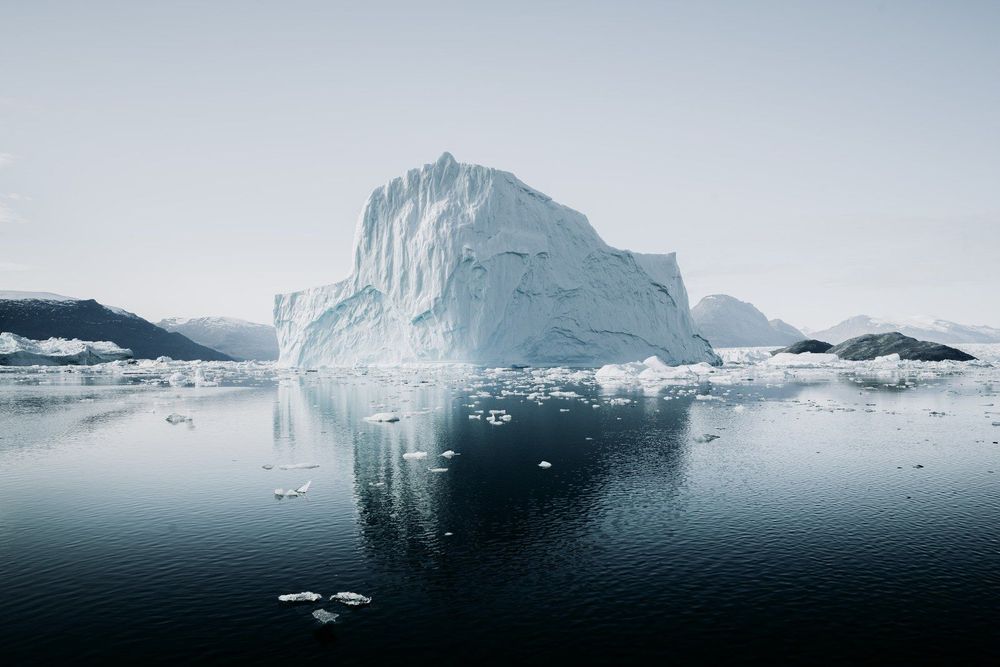
Cooling is the visible part. Power generation and chip fabrication are the iceberg
Public debate has focused heavily on data centre cooling towers and understandably so. They are local, visible and politically sensitive. Yet cooling represents only a fraction of AI’s total water footprint. Most exposure sits upstream.
Chip manufacturing requires vast volumes of ultrapure water, and the most advanced chips demand increasingly complex and water-intensive production processes. Meanwhile, thermoelectric power generation, particularly in coal- and nuclear-reliant systems, remains highly water-intensive. For investors, the implication is clear: AI’s most material water exposure lies beyond the data centre.
The real water cost of building and powering AI
Water demand linked to semiconductor manufacturing is projected to grow more than six-fold over the next 25 years, outpacing even the rapid expansion of data centre cooling.¹ The scale is striking. Ecolab’s CEO has noted that a single advanced microelectronics fabrication facility can consume the equivalent of the annual drinking water needs of 17 million people.² That is more than the drinking water needs of London and Madrid combined.
This growth is concentrated in a handful of geographies: Taiwan, South Korea and parts of the US Southwest, many already water-stressed. Taiwanese semiconductor company TSMC reportedly uses more than 150,000 tonnes of water per day at its Hsinchu facilities, representing roughly 10% of the city’s daily supply.³ As AI demand accelerates, reliance on ultrapure water intensifies in these regions.
Data centres are energy-intensive. Meeting this rising electricity demand carries its own water footprint, particularly in markets still reliant on thermoelectric generation. Coal and nuclear plants consume on average 2,100-2,400 litres of water per megawatt-hour of electricity produced.⁴ By contrast, wind and solar require negligible operational water.
Rising demand for water treatment and reuse
As AI accelerates, so too will investment in industrial water treatment and advanced recycling systems. In semiconductor manufacturing, this drives investment in advanced filtration, membrane systems and closed-loop recycling technologies.
Companies with exposure to high-specification industrial water treatment, such as Kurita and Ecolab in our portfolios, are well positioned to benefit. Ovivo Electronics, a leading provider of ultrapure water systems, and now part of Ecolab, states that its technologies deliver “some of the world’s purest water,” underscoring the importance of high-end purification in semiconductor manufacturing.⁵
The power sector presents a parallel opportunity. As power demand grows, thermoelectric plants are under increasing pressure to reduce freshwater intake, supporting investment in treated wastewater and system optimisation. Companies such as Xylem and Veralto, also represented in our portfolios, are positioned across this broader energy-water nexus. Xylem, for example, provides raw water intake and cooling systems for thermal and nuclear plants, alongside its Zero Liquid Discharge technologies that maximise water reuse.⁶
The emerging water infrastructure cycle
The AI supercycle is often framed in terms of semiconductors, cloud capacity and energy transition. Water rarely features in that discussion. Yet as digital infrastructure scales, the resilience of water systems becomes increasingly material. Managing AI’s upstream water intensity will require sustained investment in treatment, reuse and network efficiency.
For long-term investors, the intersection of digital growth and water infrastructure may prove to be one of the more durable and underappreciated structural themes of the coming decade.
¹ https://amp.xylem.com/m/aa10f8022757c5e/original/Watering-the-New-Economy-DIGITAL-final.pdf
² https://sustainabilitymag.com/news/water-and-circularity-inside-ecolabs-ovivo-takeover
³ https://en.wikipedia.org/wiki/Semiconductor_industry_in_Taiwan
⁴ https://visualizingenergy.org/what-methods-of-electricity-generation-use-the-most-water/
⁵ https://investor.ecolab.com/news/news-details/2025/Ecolab-to-Acquire-Ovivos-Electronics-Ultra-Pure-Water-Business/default.aspx
⁶ https://www.xylem.com/en-us/applications/zero-liquid-discharge-for-power-generation/
Risk: The WHEB Environmental Impact Fund, the WHEB Sustainable Impact Fund and the FP WHEB Sustainability Impact Fund are Equity funds. Investors should be willing and able to assume the risks of equity investing. The value of an investment and the income from it can fall as well as rise as a result of market and currency movement; you may not get back the amount originally invested.
This is marketing communication. Please refer to the prospectus, supplement and KIID/KID for the funds, which contain full information on the risks and detailed information on their characteristics and objectives, before making any final investment decisions.
Disclaimer: This insight may provide information about Fund portfolios, including recent activity and performance and may contain facts relating to equity markets and our own interpretation. Any investment decision should take account of the subjectivity of the comments contained in this insight. This insight is provided for information only and all the information contained in it is believed to be reliable but may be inaccurate or incomplete; any opinions stated are honestly held at the time of writing but are not guaranteed. The contents of this insight should not therefore be relied upon. It should not be taken as a recommendation to make an investment in the Funds or to buy or sell individual securities, nor does it constitute an offer for sale.