
Sustainable
Boohoo and the drunkard’s search for ESG meaning
By Seb Beloe
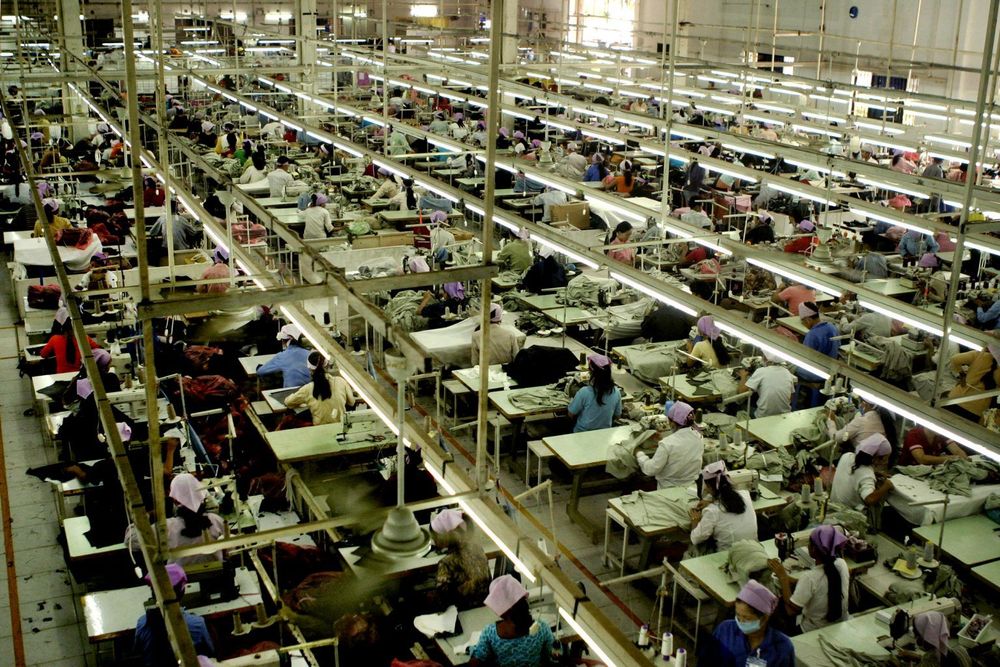
What the allegations about Boohoo's supply chain reveal about the limits of ESG ratings and the observational bias behind them.
On 5th July the UK newspapers The Times and Sunday Times broke several stories based on undercover investigations into the fast fashion retailer Boohoo. The stories alleged that workers were making garments for Boohoo for as little as £3.50 an hour (barely a third of the legal minimum wage).¹ The investigation also alleged that manufacturing continued during the local lockdown rules to control the spread of COVID-19 and that no additional hygiene or social distancing measures were in place.
ESG matters
As a fast fashion retailer, Boohoo is not a business that WHEB would ever invest in. But the case is interesting for what it tells us about the market’s attitude to environmental, social and governance (ESG) issues and the value of ESG ratings and research.
The first point to make, if it still needs to be made, is that ESG issues matter. The reaction to the newspaper reports was immediate. When the UK market reopened the following day, Boohoo’s share price fell from £3.88 to £2.97 (-23%). In the following days the share price fell to a low of £1.98 before recovering to £2.62 (-32%) by the end of July.²
Crying over ESG ratings
Boohoo, it transpires, was highly rated by many of the ESG rating agencies. Many investors use these ratings naïvely, basing decisions on the overall rating without digging into the underlying data and insights. Based on data from CSRhub, an aggregator of ESG ratings, the company had an ESG rating in the top 29th percentile of more than 19,000 companies worldwide.³ One ESG fund that claimed to focus specifically on labour conditions had Boohoo as its largest holding.⁴
Like the ‘dieselgate’ scandal that hit VW in 2015, the problem with many ESG ratings is that they suffer from what has been called the ‘drunkard’s search’ principle or the ‘streetlight effect’. This is a type of observational bias that occurs when people only search for something where it is easiest to look for it. Both names refer to a well-known joke involving a drunkard looking for his keys under a streetlight. Not because that is where they were lost, but because that is where it is easiest to look.
Boohoo received strong ESG ratings in large part because it has an impressive set of targets on a range of social and environmental issues. On the critical issue of supply-chain transparency, however, it was sadly lacking. The Fashion Transparency Index, an independent initiative focused on improving transparency in the fashion industry, gave Boohoo a score of only 9%.⁵ As one analyst put it ‘[Boohoo] simply did not provide any information that would have allowed investors and customers to trace the origin of its clothes and of course, that is exactly where the scandal is.’⁶
Impact ratings are no better
As we have written before, ESG research can provide a critical insight into the fundamental quality of a business.⁷ ESG ratings, by contrast, are subject to a range of methodological and observational biases that make them, at best, a distraction.
As a post-script we would suggest that the new breed of impact ratings are likely to be little better. One recent assessment concluded that Varian, a company wholly focused on providing products and services for treating cancer, was only 47.45% ‘impactful’. In reality, the company has only two businesses. One makes and sells radiotherapy equipment and services used to treat over three million cancer sufferers per year. The other focuses on proton therapy – a technology that is particularly effective in treating cancers in children. That sounds 100% impactful to us. And that’s why we do not rely on impact and ESG ratings.
¹ https://www.thetimes.co.uk/article/boohoo-fashion-giant-faces-slavery-investigation-57s3hxcth
² FactSet
³ https://www.csrhub.com/CSR_and_sustainability_information/BoohooCom-PLC
⁴ Liberum
⁵ https://www.fashionrevolution.org/about/transparency/
⁶ Op. Cit. 3
⁷ https://wheb.clientprojects.co.uk/what-do-esg-ratings-actually-tell-us/
Risk: The WHEB Environmental Impact Fund, the WHEB Sustainable Impact Fund and the FP WHEB Sustainability Impact Fund are Equity funds. Investors should be willing and able to assume the risks of equity investing. The value of an investment and the income from it can fall as well as rise as a result of market and currency movement; you may not get back the amount originally invested.
This is marketing communication. Please refer to the prospectus, supplement and KIID/KID for the funds, which contain full information on the risks and detailed information on their characteristics and objectives, before making any final investment decisions.
Disclaimer: This insight may provide information about Fund portfolios, including recent activity and performance and may contain facts relating to equity markets and our own interpretation. Any investment decision should take account of the subjectivity of the comments contained in this insight. This insight is provided for information only and all the information contained in it is believed to be reliable but may be inaccurate or incomplete; any opinions stated are honestly held at the time of writing but are not guaranteed. The contents of this insight should not therefore be relied upon. It should not be taken as a recommendation to make an investment in the Funds or to buy or sell individual securities, nor does it constitute an offer for sale.