Sustainable
The first quarter of 2020 is now assured a place in financial markets history
By Ted Franks

A review of the first quarter of 2020, from the market falls and the oil price war to how the strategy's sustainability themes fared.
This article appears in out Q1 2020 Quarterly Report.¹
It began just before the quarter started. A novel virus emerged in the historic Chinese regional city of Wuhan. That virus would be named COVID-19. It would deliver the worst global pandemic in modern history.
By the end of the quarter, there were 750,890 confirmed cases globally, and 36,405 deaths from the disease.² One third of the planet’s human population was in lockdown.³
The human toll of this disease is truly terrible.
Its impact on the global economy is also devastating. The ramifications will be felt for many years. As we at WHEB consider its impact on financial markets, there are four key observations to make.
First, this crisis has provoked a very sharp reversal in global equity markets. One of the strategy’s benchmarks, the MSCI World Index of stocks, fell 15.65% in the quarter. That is the 7th largest fall in that index’s history.
Second, this crisis is not just the economic disruption of the shutdown. Faced with a devastating drop in demand, the world’s major oil producers began a ferocious price war. The result was a drop in the oil price to $20.48 as at 31st March, a price not seen since 2002.
Third, the question is not simply whether a severe recession will result. Many commentators are predicting a depression, a more severe downturn than the global economy has seen since the second world war.
Fourth, is that this extreme challenge has prompted an extreme policy response. The scale of the monetary and fiscal stimulus enacted around the world is unparalleled. It may well be enough to prevent the depression that everyone fears.
In this context, the strategy has performed reasonably well during the crisis.
The quarterly drawdown of 14.58% was 0.85% better than the MSCI World. It was also 0.8% better than its other benchmark, the Investment Association Global Peer Group Median.⁴
Our attribution analysis helps us to uncover some of the reasons why. These early stages of a new economic cycle favour some of our sustainability themes and provide challenges for others.
Thematic selection effect has been a positive
The largest positive contributor wasn’t even a single theme. We use the term “thematic selection effect” to measure the contribution of index stocks which are not included in our universe of sustainability stocks. It is imperfect, for reasons not worth discussing here. But it gives some indication of the effect of investing in stocks with a positive impact.
In the COVID-19 crisis, this has been a significant positive. The most important component has been avoiding energy and financial stocks. Even before this crisis, we of course think that fossil energy companies are facing an existential threat.
Of our active themes, Resource Efficiency was the best contributor. This consists largely of cyclical stocks, often manufacturers of physical equipment, known as “industrials”. We expected that they would find the crisis difficult, and they still may. But in this first period, they held up well.
The most likely explanation for this, as we see it, is in the style of companies we prefer. We look for high quality industrial companies with low levels of indebtedness. We use our analysis of their environmental, social and governance performance to help us find them.
The other of our two largest themes (alongside Resource Efficiency) is Health. The stocks in this theme help to manage and solve the crisis. They are also defensive, at a time when the equity market is reacting in fear.
An air pocket for the transport industry
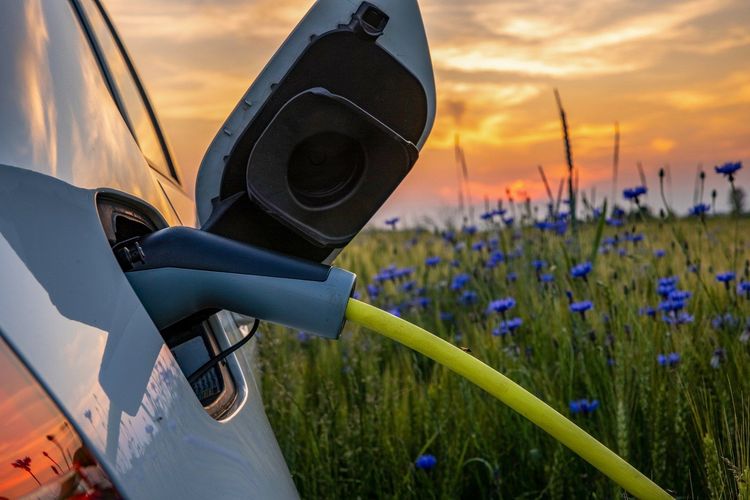
By far the worst performing theme in the crash was Sustainable Transport. We have strong conviction in the transition to electric vehicles. We think this will happen sooner and in greater volumes than the market appreciates.
But the companies which will enable this transition are ultimately sensitive to overall global car volumes. The COVID-19 crash has had a devastating effect on new car buying. Much of the world cannot physically move to acquire a car. Even if they could, under the new economic uncertainty it is a major purchase which will often be delayed.
With our long-term lens, we look through this crisis to a recovery in car buying, which will be dominated by electric cars. So we will not be meaningfully reducing our exposure, even as the later parts of 2020 are certain to be painful for those companies.
Our attribution also showed a meaningful negative allocation effect from our preference for companies smaller than the index average. So we can say that, amongst smaller companies, our stocks were the right choice for this period.
The crisis has created a huge number of questions.
What impact will the crash have, in the short term? How are our companies suited to survive and thrive, in the medium term? And most importantly, what about the long term. Will there be societal and behavioural changes, which will alter the course of the sustainable transition?
In general, we think the case for companies benefitting and enabling this transition will be strengthened rather than weakened. We outline our reasons why in the companion piece in this review. But the first quarter of 2020 has certainly given us plenty to ponder.
3 https://www.businessinsider.com/countries-on-lockdown-coronavirus-italy-2020-3?r=US&IR=T
4 Based on midday close price for the FP WHEB Sustainability Fund, and end of day prices for the MSCI World and IA Global.
Risk: The WHEB Environmental Impact Fund, the WHEB Sustainable Impact Fund and the FP WHEB Sustainability Impact Fund are Equity funds. Investors should be willing and able to assume the risks of equity investing. The value of an investment and the income from it can fall as well as rise as a result of market and currency movement; you may not get back the amount originally invested.
This is marketing communication. Please refer to the prospectus, supplement and KIID/KID for the funds, which contain full information on the risks and detailed information on their characteristics and objectives, before making any final investment decisions.
Disclaimer: This insight may provide information about Fund portfolios, including recent activity and performance and may contain facts relating to equity markets and our own interpretation. Any investment decision should take account of the subjectivity of the comments contained in this insight. This insight is provided for information only and all the information contained in it is believed to be reliable but may be inaccurate or incomplete; any opinions stated are honestly held at the time of writing but are not guaranteed. The contents of this insight should not therefore be relied upon. It should not be taken as a recommendation to make an investment in the Funds or to buy or sell individual securities, nor does it constitute an offer for sale.