
A look at the green elements of the European Union's recovery package, from building efficiency and rail investment to electric vehicle incentives.
‘Never waste a good crisis’. In response to the COVID-19 pandemic, the European Union (“EU”) has proposed a €750 billion recovery plan to repair the economic and social damage. But this recovery plan has green strings attached. 25% of the recovery spending is set aside for green investments.
This is consistent with the EU’s ambition to use the European Green Deal as its future growth strategy. The European Green Deal is a longer-term roadmap for transforming the EU into a sustainable economy. With this promising backdrop, there are several areas that particularly interest us in the recovery plan.
One of the critical areas of focus in the plan is on building energy efficiency. This is unsurprising: energy use in buildings accounts for roughly 40% of total energy consumption in the EU.¹ To combat climate change, we need to boost building efficiency technologies. The critical areas are insulation, heating, ventilation and air conditioning (HVAC) and lighting. This includes improving the existing stock of buildings. The European Commission aims to increase renovation rates from below 1% today to 3%.
In the recovery package, the Commission prioritizes public buildings. We actually see more energy savings opportunities in residential buildings. We have already seen a spike in household energy use during the pandemic as more people work from home. This is likely to endure, in our view, as more people work from home post COVID-19. So the economic and environmental case for improving residential building efficiency is stronger than ever. Happily, energy efficiency in residential buildings is not totally neglected in the recovery plan. “Green” mortgages may be offered for private residential buildings to encourage renovation.
After the outbreak of COVID-19, one might wonder about the prospects for rail investments. Will people still have confidence getting on public transport? How can a railway operator make money with all these social distancing measures in place? The EU is not deterred. The environmental case for rail is too strong to be written off. According to the European Environmental Agency, rail accounts for 0.5% of total transport emissions. Contrast this with road transport, which accounts for 71.7%. This explains the strong support for rail in the form of a €40 billion package, focused on key corridors where passengers and freight transport can be shifted to rail.
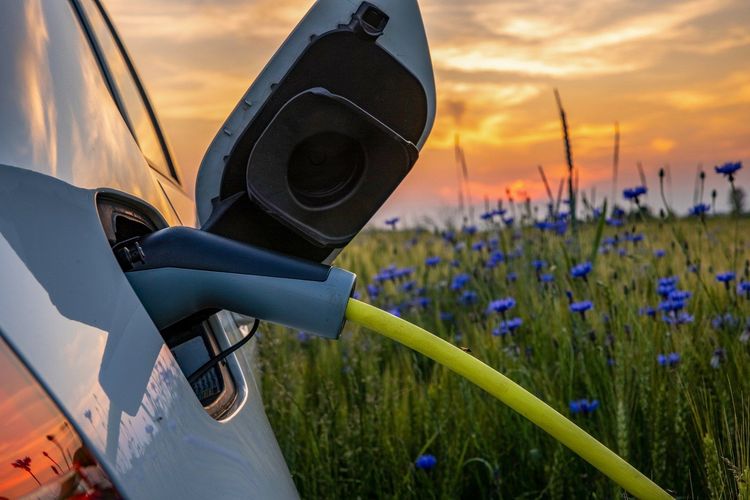
Given those huge emissions from road transport, we have long been bullish about the shift towards electric vehicles (“EVs”). Unsurprisingly, the recovery package also includes incentives to promote the adoption of EVs. It includes €20 billion on EV purchase incentives and funding for 2 million charging points by 2025. To put it in context, these 2 million charging points are more than the estimate of 1.2-1.3 million required by 2025 according to the green campaign group Transport and Environment.²
Nevertheless, the recovery spending is only half of the story. To maximise the positive environmental impact, the European Commission plans to raise taxes from polluting industries to finance the recovery plan. It has proposed a series of new EU taxes. They include a carbon border adjustment mechanism, and a tax on non-recyclable plastics.
The recovery proposal is not set in stone. EU leaders will meet on 18-19 June to discuss the proposal. All 27 member states must also agree to the EU budget and the recovery fund. If it survives these negotiations, the EU’s green approach to stimulate its economy is unquestionably very welcome. However, we have yet to see similar responses from other key countries like China, India and the USA. Climate change is a global issue. It needs a global response.
¹ European Commission
Risk: The WHEB Environmental Impact Fund, the WHEB Sustainable Impact Fund and the FP WHEB Sustainability Impact Fund are Equity funds. Investors should be willing and able to assume the risks of equity investing. The value of an investment and the income from it can fall as well as rise as a result of market and currency movement; you may not get back the amount originally invested.
This is marketing communication. Please refer to the prospectus, supplement and KIID/KID for the funds, which contain full information on the risks and detailed information on their characteristics and objectives, before making any final investment decisions.
Disclaimer: This insight may provide information about Fund portfolios, including recent activity and performance and may contain facts relating to equity markets and our own interpretation. Any investment decision should take account of the subjectivity of the comments contained in this insight. This insight is provided for information only and all the information contained in it is believed to be reliable but may be inaccurate or incomplete; any opinions stated are honestly held at the time of writing but are not guaranteed. The contents of this insight should not therefore be relied upon. It should not be taken as a recommendation to make an investment in the Funds or to buy or sell individual securities, nor does it constitute an offer for sale.