
Sustainable
“First we feed the people, then we plan the revolution”
By WHEB Investment Team
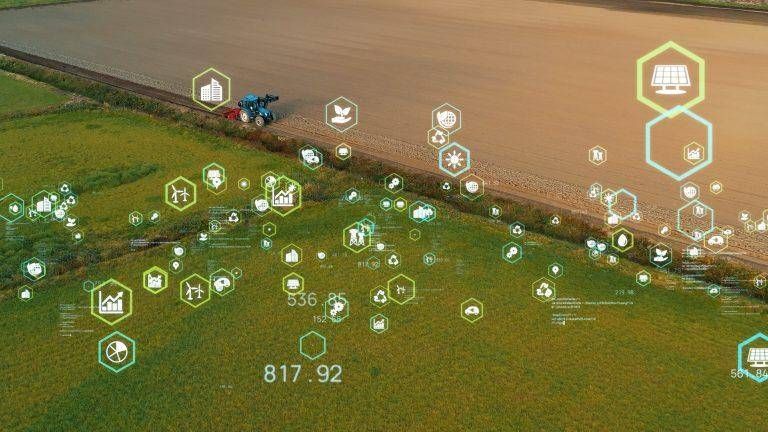
Food price inflation is the starting point for a look at precision farming, cattle feed additives and algae-based omega-3 oils.
These are the words of Jack Monroe, a struggling single parent turned activist. Jack uses their platform to teach people how to feed themselves with very little money… and to rage against the machine. Jack’s diligently crafted shopping lists, posted semi-regularly on Twitter, serve as a real-time reminder of the effect massive food inflation is having on the poorest members of our society.
UK supermarket inflation hit 8.3% in June, the highest rate in 13 years¹. Even the most basic items, like pasta and bread, have surged in price². Similar headlines can be seen throughout the world. This is putting immense pressure on low-income families, who are forced to spend more of their budget on food than ever before.
The question of how we got here is complex. The answer encompasses politics, war, and economic policy. We investors can’t do much about any of these. But we can focus on finding solutions.
Over the long term, the best way to feed the eight billion people (and counting) who inhabit our planet is to improve crop yields and increase overall production. And to do so in a way that protects the environment and fosters biodiversity.
Trimble’s precision farming technology does just that. Trimble is a pioneer in flow and application control technology. This helps farmers save precious seeds while reducing the need for harmful fertilisers. Their products can even optimise water use –improving crop yields by up to 30%³.
Trimble also provides connectivity solutions and software. These enable farmers to view, map, and record crop yields over time. Armed with this data, farmers can track the performance of their crops year by year, to improve seed selection and maximise crop production.
While Trimble’s innovations are great for crops, they are less equipped to help with livestock farming. Global meat consumption has been growing rapidly and, with it, greenhouse gas emissions. Today, nearly 15% of global emissions can be attributed to livestock⁴.
The obvious (and best) solution is for wealthy Westerners to consume less meat and dairy. But realistically, this change in behaviour may take generations.
Recognising this problem, DSM has figured out how to reduce methane emissions from cattle. Bovaer® is a feed additive for cows, developed over 10 years by DSM. The product contains a molecule called 3-NOP which reduces enteric methane emissions by 30% for dairy cows and up to 90% for beef cows. This helps to mitigate the environmental damage from livestock production.
DSM has also found a way to farm fish more sustainably. Unbelievably, around 20% of all the fish caught in the world, and 75% of harvested fish oil, is used to feed other fish⁵. This is all so that you and I can get our omega-3.
DSM has developed Veramaris, an omega-3 oil made from algae. Just one tonne of Veramaris can replace a whopping 60 tonnes of wild-caught fish. This can help keep us humans fed and healthy for years to come. It also means that huge quantities of wild fish are left where they belong – in the sea.
We recognise that these innovations offer little comfort to those currently suffering under a cost of living crisis. But they do give us hope that, over time, we will get better at feeding the world’s swelling population.
In a sustainable society, no-one should go hungry.
¹ https://www.theguardian.com/business/2022/jun/21/uk-supermarket-inflation-aldi-lidl-kantar
³ https://agriculture.trimble.com/solutions/water-management/
⁴https://papersowl.com/discover/key-facts-and-findings
⁵https://www.dsm.com/corporate/markets/animal-feed/replacing-fish-with-algae-with-veramaris.html
Risk: The WHEB Environmental Impact Fund, the WHEB Sustainable Impact Fund and the FP WHEB Sustainability Impact Fund are Equity funds. Investors should be willing and able to assume the risks of equity investing. The value of an investment and the income from it can fall as well as rise as a result of market and currency movement; you may not get back the amount originally invested.
This is marketing communication. Please refer to the prospectus, supplement and KIID/KID for the funds, which contain full information on the risks and detailed information on their characteristics and objectives, before making any final investment decisions.
Disclaimer: This insight may provide information about Fund portfolios, including recent activity and performance and may contain facts relating to equity markets and our own interpretation. Any investment decision should take account of the subjectivity of the comments contained in this insight. This insight is provided for information only and all the information contained in it is believed to be reliable but may be inaccurate or incomplete; any opinions stated are honestly held at the time of writing but are not guaranteed. The contents of this insight should not therefore be relied upon. It should not be taken as a recommendation to make an investment in the Funds or to buy or sell individual securities, nor does it constitute an offer for sale.