How an unusually warm, dry April in the UK and the protests that followed illustrate the changing climate backdrop.
In the UK, April is a month usually associated with rain showers. This April, not-so-much. Rainfall was 71% of the 1981-2010 long term average¹. The monthly average temperature was 1.0° Celsius above the long term mean of 8.4°. These deviations are not particularly startling by the standards we are becoming used to in the era of climate change. But they were enough to produce some more reminders of the future we face.
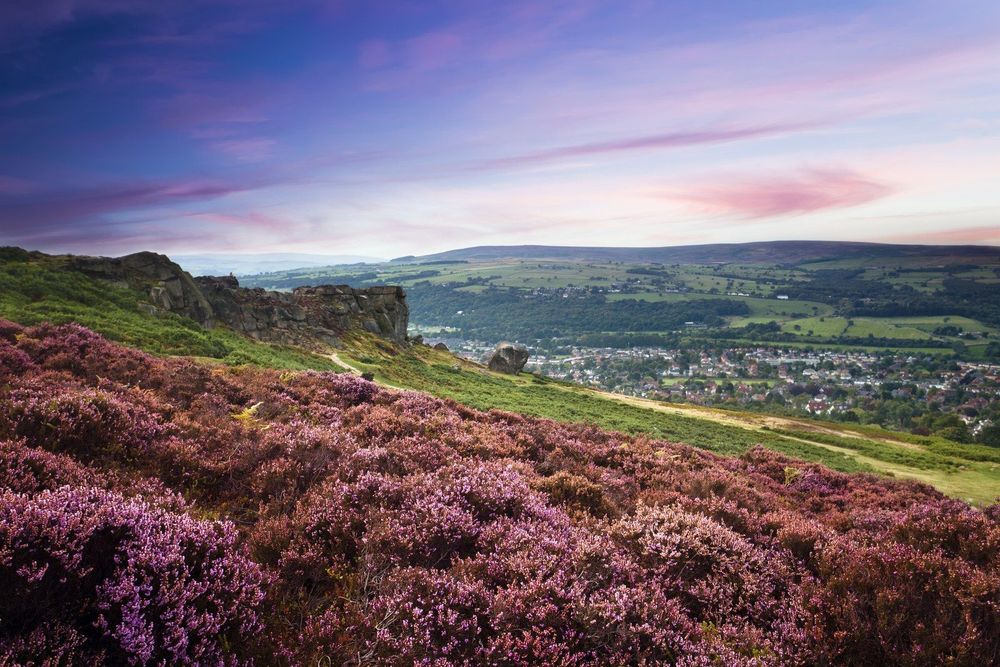
Your correspondent grew up in a small town in the north of England called Ilkley. It is overlooked by a moor. That moor has been made famous-ish by a song, “Ilkla Moor Baht ‘at”, which, in a roundabout way, is about the carbon cycle². Visiting my parents, I ran across Ilkley Moor early in April and was amazed how dry it was. Two weeks later, on 21 April, it caught fire and burned for two days.
A moorland fire in spring isn’t actually that rare. Managed fires are used to keep down overgrowth, particularly in areas used for grouse shooting. They are deliberately started when the underlying ground is wetter, as that makes them easier to control. This “muirburn³” season runs until mid-April, when the risks start to go up.
The Ilkley blaze wasn’t in this category. It appears to have been started by a teenager, who has been charged with arson⁴. And it spread quickly because the moor was like a tinderbox. It was only prevented from reaching the town by a major emergency response. As many as 14 fire crews⁵ and two helicopters were involved.
We wrote about investing in climate change adaptation in our quarterly report in July 2018. There are lots of companies whose products and services are needed to prevent fires like this from breaking out. Those companies help to manage heat and water, or to build infrastructure around areas of risk.
We do also invest in companies that are part of the response, in our “Safety” theme. MSA Safety is the world’s leading supplier of safety clothing and equipment. It has number one market positions in breathing apparatus, helmets, and firefighter clothing.
MSA Safety has a pretty special competitive advantage. Fire crews, and fire crew unions, know and trust its equipment. They’ve been working with it for generations. The company was founded in 1914. Governments, rather than the fire crews themselves, buy the equipment. But they’re reluctant to buy anything the crews don’t trust.
So MSA is defending or increasing its market share, as climate change starts to drive up the demand for rescue equipment. A category that used to grow in line with overall economic growth is now forecast to grow as much as twice as fast⁶. MSA’s stock has already been a great performer, outperforming the index by 155% since we first bought it⁷. We think there is more to come.
A fire-blackened hillside two hundred metres from my parent’s home is a poignant experience of climate change. We in the West and particularly in the UK are mercifully sheltered from its worst effects. But more and more of us are touched by climate change. We’re becoming alarmed by the problem and trying to find ways to contribute to a solution.
Back in London, that same two hundred metres distance separated our office from the Extinction Rebellion climate protests at Oxford Circus. Protesters from around the country gathered for peaceful but impactful demonstrations. They don’t think the UK government, or global governments, are moving fast enough to address the climate crisis.
We agree with them. WHEB’s partners were co-signatories of a letter to The Times⁸, supporting the protesters’ agenda. We know that a real climate response doesn’t need to be economically damaging. With every investment we make, we are building this case.
¹ https://www.metoffice.gov.uk/climate/uk/summaries
² https://en.wikipedia.org/wiki/On_Ilkla_Moor_Baht_%27at
³ https://www.bbc.co.uk/news/science-environment-47389480
⁵ https://www.bbc.co.uk/news/uk-england-leeds-47999394
⁶ https://www.grandviewresearch.com/industry-analysis/fire-safety-equipment-market
⁷ Source WHEB/ Bloomberg
⁸ https://www.whebgroup.com/news-views/wheb-in-the-news/ (April 23 2019)
Risk: The WHEB Environmental Impact Fund, the WHEB Sustainable Impact Fund and the FP WHEB Sustainability Impact Fund are Equity funds. Investors should be willing and able to assume the risks of equity investing. The value of an investment and the income from it can fall as well as rise as a result of market and currency movement; you may not get back the amount originally invested.
This is marketing communication. Please refer to the prospectus, supplement and KIID/KID for the funds, which contain full information on the risks and detailed information on their characteristics and objectives, before making any final investment decisions.
Disclaimer: This insight may provide information about Fund portfolios, including recent activity and performance and may contain facts relating to equity markets and our own interpretation. Any investment decision should take account of the subjectivity of the comments contained in this insight. This insight is provided for information only and all the information contained in it is believed to be reliable but may be inaccurate or incomplete; any opinions stated are honestly held at the time of writing but are not guaranteed. The contents of this insight should not therefore be relied upon. It should not be taken as a recommendation to make an investment in the Funds or to buy or sell individual securities, nor does it constitute an offer for sale.