
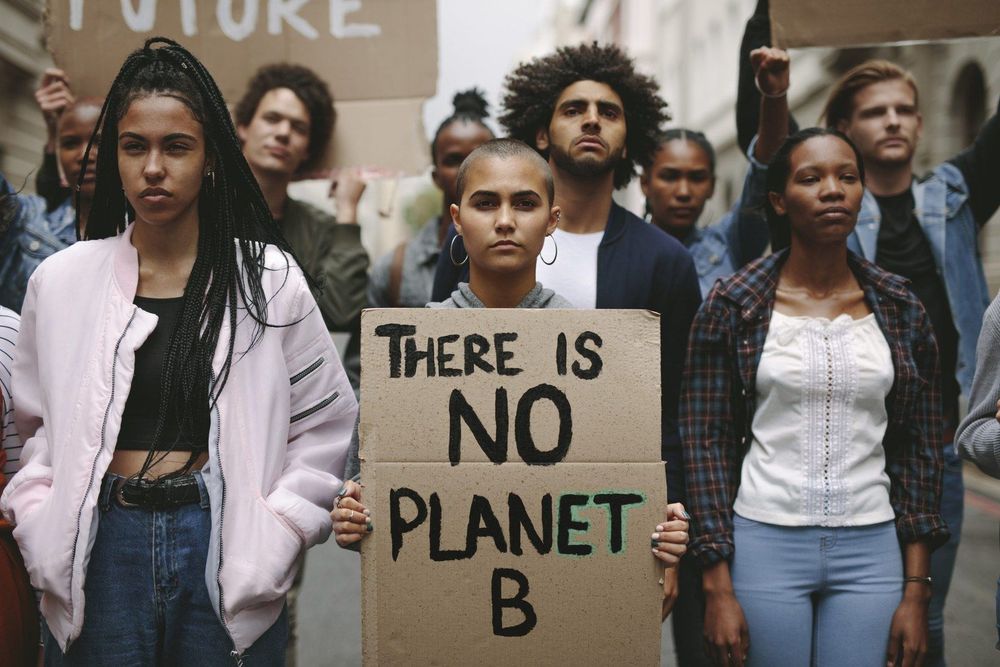
An assessment of what COP27 delivered, from the loss and damage fund and new coal financing deals to the omissions that frustrated delegates.
So Rishi Sunak did eventually bow to pressure and join other world leaders at the second most attended climate negotiations of all time¹. But as global attention now drifts across the Saudi Arabian peninsula from Sharm el-Sheikh to Qatar, what was ultimately achieved at this year’s climate talks?
Some important steps forward
There were clearly some important successes that came out of the COP27 negotiations including, most obviously, the establishment of a ‘Loss and Damage’ fund. This looked impossible just a few years ago, but perhaps spurred by the appalling flood damage in Pakistan and Nigeria, delegates did commit to establish a pooled fund to support action in countries most affected by climate change. Key operational decisions such as what criteria trigger a payout, and the size and source of contributions, will be hammered out between now and the end of COP28. The fact that developed countries still haven’t fulfilled previous commitments to provide $100bn a year to help developing countries clearly doesn’t bode well. A recent report also indicated that these countries will likely need as much as $1 trillion per annum.²
There were other good things as well. China and the US are again formally talking about how to galvanise global support for more aggressive action and ‘Brazil is back’ with President-elect Lula committing to reversing damage to the Amazon rainforest.
Improved targets
There were even some increased commitments. The EU managed to eke out a 2% increase in the ambition of its 2030 emission reductions target and Mexico raised its target – albeit against a ‘business as usual’ scenario – from 22% to 35% and even offered to extend this to a 40% cut by 2030 contingent on international support.
Following on from the US$8.5bn deal struck in Glasgow to finance the early retirement of coal power plants in South Africa, Indonesia also announced a US$20bn deal to accelerate the retirement of their own coal plants. This will ensure a peaking of Indonesian power sector emissions by 2030 and net zero carbon emissions by 2040 – a decade earlier than the previous deadline. Vietnam is reported to be the next in the queue for a similar type of deal.
Disappointment and missed opportunities
And yet, the overall mood at the end of the conference was still of disappointment. Alok Sharma, the UK’s outgoing President of COP was visibly angry as the session came to an end. “Emissions peaking before 2025 as the science tells us is necessary? Not in this text. Clear follow-through on the phase-down of coal? Not in this text. Clear commitment to phase out all fossil fuels? Not in this text”, he protested.
These objectives were supported by over eighty countries at the talks but were ultimately left out of the final agreement. What’s more, new language was included that emphasized the role of ‘low carbon energy’. A term widely understood to represent an effort to include support for natural gas in future emission reduction initiatives. Many commentators pointed the finger at the army of fossil-fuel lobbyists at the talks.
A floor not a ceiling
Ultimately though, the COP process should not be seen as setting a ceiling for ambition on climate, but rather as a floor. With 192 countries required to agree unanimously on the outcome the bar is set quite low and, notwithstanding the emotional scenes in Paris in 2015, it is rarely sensible to look to the COP process for hope. There is still scope for optimism, but for that you are better off looking at the actions of leading businesses, cities, communities... and investors. These groups have become not just powerful advocates for change, but also agents for real progress on the ground.
¹ https://www.carbonbrief.org/analysis-which-countries-have-sent-the-most-delegates-to-cop27/
² https://www.lse.ac.uk/granthaminstitute/publication/finance-for-climate-action-scaling-up-investment-for-climate-and-development/
Risk: The WHEB Environmental Impact Fund, the WHEB Sustainable Impact Fund and the FP WHEB Sustainability Impact Fund are Equity funds. Investors should be willing and able to assume the risks of equity investing. The value of an investment and the income from it can fall as well as rise as a result of market and currency movement; you may not get back the amount originally invested.
This is marketing communication. Please refer to the prospectus, supplement and KIID/KID for the funds, which contain full information on the risks and detailed information on their characteristics and objectives, before making any final investment decisions.
Disclaimer: This insight may provide information about Fund portfolios, including recent activity and performance and may contain facts relating to equity markets and our own interpretation. Any investment decision should take account of the subjectivity of the comments contained in this insight. This insight is provided for information only and all the information contained in it is believed to be reliable but may be inaccurate or incomplete; any opinions stated are honestly held at the time of writing but are not guaranteed. The contents of this insight should not therefore be relied upon. It should not be taken as a recommendation to make an investment in the Funds or to buy or sell individual securities, nor does it constitute an offer for sale.