A look at how drugs are priced, the pressures reshaping that market, and what it means for health outcomes and investors.
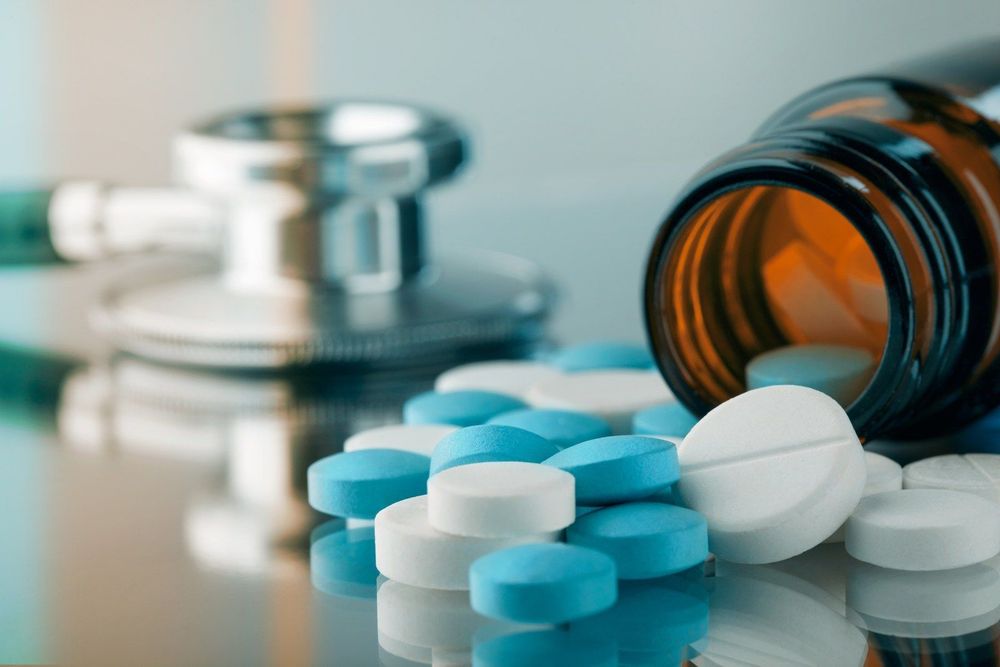
In January we published quarterly and monthly reports. Both of them included thoughts on the changing healthcare market. We return to the topic again only three months later. But this is no surprise. It’s a colossal industry which is grappling with major demographic shifts. And it has profound implications for our health and happiness.This time the spotlight falls on a specific part of the health market: drugs. Drugs are around 10% to 15% of total healthcare spending¹ in most developed economies. Their prices have grown broadly in line with other healthcare costs². Those costs have themselves grown much faster than inflation.
This isn’t supposed to happen. When drugs’ patents expire, they should be open to generic competition. There will always be new higher-priced patented drugs. But overall, the promise was that drugs would be a smaller piece of the pie.
This contradiction has been in focus for a while. In the USA, it is playing out in the political arena. The starting gun for serious scrutiny was a Hillary Clinton tweet in September 2015³. She attacked price gouging by specialty pharmaceutical companies. Their share prices have never really recovered.
Donald Trump would never like to agree with Hillary on anything. Despite this, in due course he too joined the fight. His flagship “Blueprint to Lower Drug Prices” launched in May 2018⁴. This included a range of measures, some more sensible than others.
In March this year, the debate moved to the political centre stage. Just before the month started, leaders from large drug-makers were grilled in a Senate hearing. Just after the month end, their counterparts from the firms that buy drugs for patients gave their side of the story. The testimony was wide-ranging. But some tentative steps towards change have now come into view. The first moves are towards greater price transparency.
This is a welcome direction but on its own won’t keep a lid on prices. For that, you really need meaningful buyer power. That’s why we invest in some of the companies that deliver that, such as CVS, Centene and Premier. They consolidate demand to negotiate lower prices.
This is the model followed by single-buyer systems around the world, such as the NHS here in the UK. But before we outside the US congratulate ourselves on figuring out a better way, there is a deeper question to consider. Developing new drugs is very expensive, now often more than $1bn for an individual therapy. If the drug-makers can’t earn a return on that investment, they will lose the incentive to innovate.
March also provided a good example of this tension. Drug-maker Vertex has a new cystic fibrosis drug called Orkambi. It is a lifesaver. It dramatically slows the decline in lung function that is a leading cause of death among cystic fibrosis sufferers. But it is expensive: Vertex wants the NHS to pay at least £104,000 per patient per year. The NHS can only offer £14,000⁵.
With around 3,000 people⁶ who could benefit from Orkambi watching on, the issue has moved into our own political arena. In March, a Parliamentary Health and Social Care Committee Inquiry gathered evidence⁷. The Ministry is now considering its response.
Over the last few decades, innovation in pharmaceuticals has improved lives for everyone on the planet. But sharing the costs and benefits fairly is a real challenge. That is the key reason why our strategy has had very limited exposure to drug-makers in the last ten years.
We have selective exposures where these issues of pricing are less critical. This includes in generics, through Fresenius, and plasma-based therapies, through CSL. We invest in buyer-power companies as mentioned earlier. We also invest in some companies which can help to use technology to deliver better outcomes, such as Cerner. But otherwise we’re waiting for a more sustainable business model for drug-making to develop.
¹ https://www.drugcostfacts.org/us-healthcare-spending
⁵ https://news.sky.com/story/orkambi-drugs-maker-says-nhs-undervalues-patient-lives-11442845
⁶ https://www.cysticfibrosis.org.uk/the-work-we-do/campaigning-hard/life-saving-drugs/orkambi
Risk: The WHEB Environmental Impact Fund, the WHEB Sustainable Impact Fund and the FP WHEB Sustainability Impact Fund are Equity funds. Investors should be willing and able to assume the risks of equity investing. The value of an investment and the income from it can fall as well as rise as a result of market and currency movement; you may not get back the amount originally invested.
This is marketing communication. Please refer to the prospectus, supplement and KIID/KID for the funds, which contain full information on the risks and detailed information on their characteristics and objectives, before making any final investment decisions.
Disclaimer: This insight may provide information about Fund portfolios, including recent activity and performance and may contain facts relating to equity markets and our own interpretation. Any investment decision should take account of the subjectivity of the comments contained in this insight. This insight is provided for information only and all the information contained in it is believed to be reliable but may be inaccurate or incomplete; any opinions stated are honestly held at the time of writing but are not guaranteed. The contents of this insight should not therefore be relied upon. It should not be taken as a recommendation to make an investment in the Funds or to buy or sell individual securities, nor does it constitute an offer for sale.