
What ESG means in practice, how it differs from impact investing, and why WHEB looks first at the products companies sell.
This article appears in our Q1 2019 Quarterly Report.¹
ESG is a widely used term. But what does it mean in practice and how does it relate to impact investing?
The WHEB Sustainability Fund is an impact fund. Our focus is the way companies influence the world. The most important of those ways is in the products or services they sell.
At the same time, we are very interested in the way companies deliver those products or services. This includes how they interact with all the parts of their value chain. These interactions are often termed “Environmental, Social and Governance” (or “ESG”) factors.
We are committed users of ESG analysis because we think it provides invaluable information. It helps us to assess management quality and appraise the risks the company is taking. Simply put, thoughtful management teams with a long-term approach will think about all of their stakeholders. Those are the companies we want to back.
A battle of the time horizons
This quarter provided a real-life parable about the value of this approach. It was a neat contrast between two enormous companies that are very familiar in everyday life. The two companies are Kraft Heinz, and Unilever.
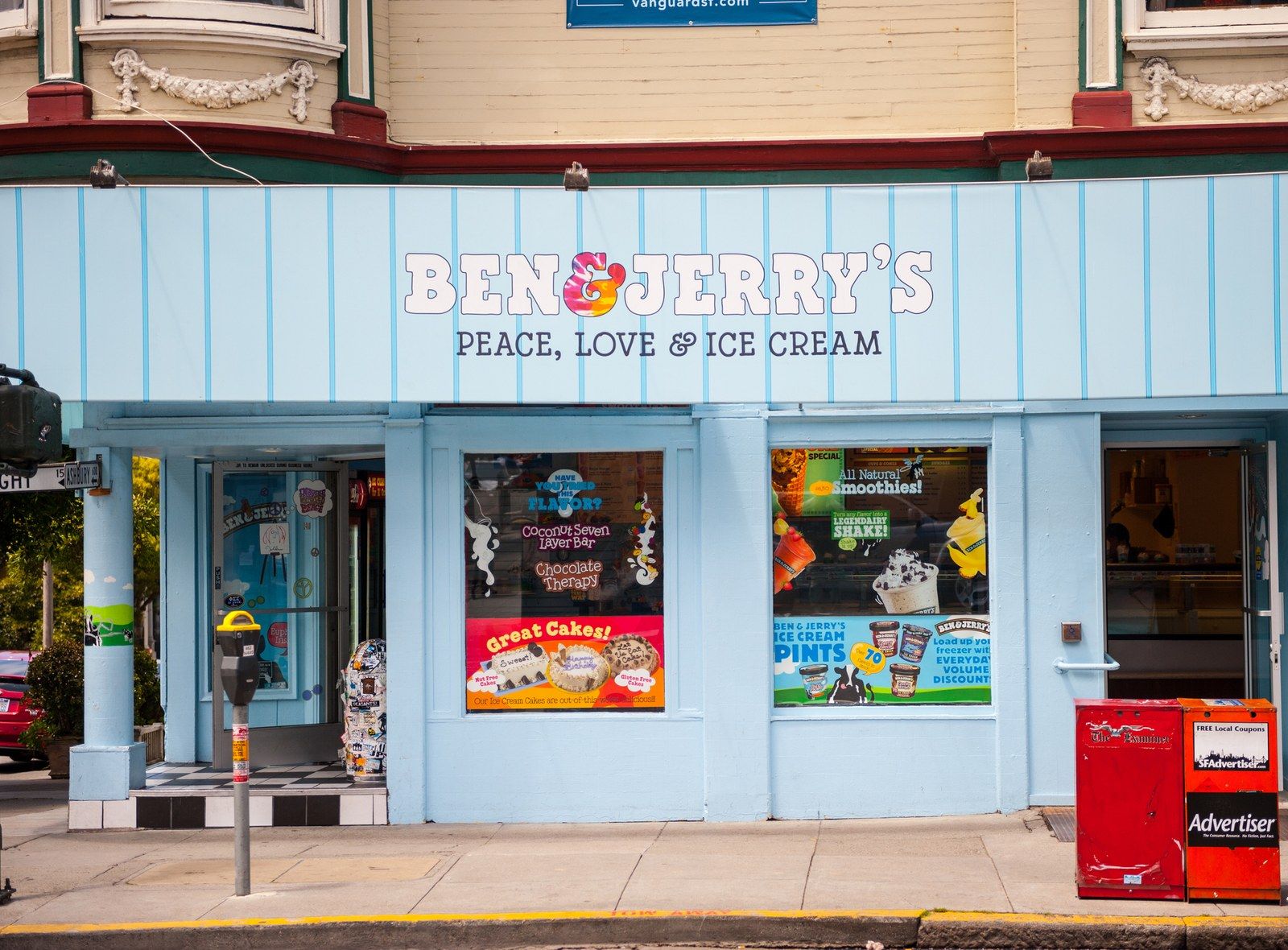
To declare our position upfront, WHEB wouldn’t actually invest in either. Both of these companies sell consumer staples: household products, and packaged food. Neither of those categories solve a sustainability challenge. Indeed, some of their brands contribute to unhealthy lifestyles. I’m looking at you, Oscar Mayer hotdogs (Kraft), and you, Ben and Jerry’s ice cream (Unilever).
Not a positive impact stock, but Unilever is an ESG leader
But if we were forced to choose between the two, we know which one we’d prefer. Unilever is a watchword for leadership on corporate ESG issues. From 2009 to the end of last year, it had a genuinely visionary CEO called Paul Polman. He is certainly thoughtful: he considered being a priest and a doctor, before beginning his business career. He then had a deeply formative experience when he was caught up in the Mumbai terrorist attacks of 2008.
Taking control of Unilever shortly afterwards, his vision was clear. Unilever has built its business around its Sustainable Living Plan. This has three major pillars: improving health and wellbeing, halving its environmental impact, and enhancing livelihoods. More prosaically, it also means working hard on evolving with their consumers and investing for long term growth.
Kraft Heinz: a different approach
Kraft Heinz is about as far apart from this mindset as two companies can be. Heinz was acquired in 2013 by Berkshire Hathaway and Brazilian private equity firm 3G Capital. Berkshire Hathaway is the umbrella firm for investing legend Warren Buffett, a man more naturally inclined to think about the long term. But 3G, led by his friend Jorge Paulo Lemann, is quite different. They have a reputation for ruthless cost-cutting – using a system called “zero-based budgeting” – and stripping out layers of management.
This approach quickly improves margins. 3G achieved some notable success with its earlier investments, including Burger King. But as time passes, the downside of such ruthless cost cutting becomes clear. 3G’s companies have struggled for growth and innovation. One solution in this era of cheap debt finance is to keep buying other companies to create growth. Following this logic, Heinz was combined with Kraft in July 2015.
This combination worked for a while, as the costs were extracted from the combined entity. But less than two years later, with growth slowing, they needed to do it again. And this time, they went for an even bigger target: Unilever.
The cost-cutter’s bid
When the bid was made in February 2017, Unilever had nearly twice the revenues of Kraft Heinz. But the latter’s better margins, and hubris around their deal-making, meant their valuations weren’t far apart. To finance the deal, Kraft Heinz planned to borrow enough to put their investment grade ratings at risk. They would pay this down with the cash generated from shredding the Unilever cost base. Wall Street was of course enthusiastic, with the majority of Kraft Heinz’s analysts supporting the deal.
But Polman and Unilever fought back. He made the case for the long-term value creation of the Unilever model, and for an ESG approach. In his words, in a later interview: “… our model is of compounded long-term value creation. The cultures were different. We are really talking about a clash of two different philosophies and two different economic models – a clash between a few billionaires and the billions of people that we serve”.² Despite the bid premium, the board supported his strategy.
A victory for the angels
Mr Polman retired from Unilever at the start of 2019. But he has been very thoroughly vindicated. Unable to grow, the firm that wanted to dismantle his vision has floundered. In the middle of this quarter, on 22 February, Kraft Heinz shares fell 28% as it announced more lacklustre results, an SEC investigation of its accounting, and a $15.4bn write-down on its brands.
As bad as that one day move was, it was just a bigger step in a disastrous longer trend. Since announcing the bid for Unilever, Kraft Heinz has dropped 62.9% while the MSCI World Index has grown 22.1%. And Unilever has beaten the index, growing 26.4%.³
In other words, the company Kraft Heinz were so sure they could improve, has outperformed them by nearly 90%. As a lesson in the importance of long-term value creation, it is hard to beat.
¹ https://www.whebgroup.com/reporting-impact-investment/impact-reports
² https://www.ft.com/content/2209d63a-d6ae-11e7-8c9a-d9c0a5c8d5c9
³ Market data sourced from Bloomberg, WHEB analysis
Risk: The WHEB Environmental Impact Fund, the WHEB Sustainable Impact Fund and the FP WHEB Sustainability Impact Fund are Equity funds. Investors should be willing and able to assume the risks of equity investing. The value of an investment and the income from it can fall as well as rise as a result of market and currency movement; you may not get back the amount originally invested.
This is marketing communication. Please refer to the prospectus, supplement and KIID/KID for the funds, which contain full information on the risks and detailed information on their characteristics and objectives, before making any final investment decisions.
Disclaimer: This insight may provide information about Fund portfolios, including recent activity and performance and may contain facts relating to equity markets and our own interpretation. Any investment decision should take account of the subjectivity of the comments contained in this insight. This insight is provided for information only and all the information contained in it is believed to be reliable but may be inaccurate or incomplete; any opinions stated are honestly held at the time of writing but are not guaranteed. The contents of this insight should not therefore be relied upon. It should not be taken as a recommendation to make an investment in the Funds or to buy or sell individual securities, nor does it constitute an offer for sale.