Real Assets
Digitalisation, decarbonisation and the new infrastructure supercycle
Why real assets sit at the centre of a multi-decade infrastructure investment cycle driven by digitalisation and decarbonisation.
We appear to be entering a multi-decade infrastructure investment cycle driven by digitalisation and the energy transition. Real assets are a critical element in addressing key strategic objectives for modern economies, whether these be greater connectivity, cleaner energy or more resilient supply chains.
Within real assets, listed infrastructure offers one of the most effective, and currently undervalued, ways for investors to access long-term growth trends.
The great infrastructure upgrade
Years of underinvestment in developed markets, coupled with rising demand in emerging economies, have created a pressing need to rebuild and expand critical infrastructure. Across the FP Foresight Global Real Infrastructure Fund (acquired by Guinness in September 2026) portfolio companies have grown capex by roughly 10% per year since 2015, supporting sustained operating earnings growth of around 7% annually from 2018-20241.
For investors, this combination of structural growth and defensive cash flows strengthens portfolio resilience. Within this backdrop, our listed real asset strategies focus on four long-term themes: digitalisation, energy transition, demographic change and the infrastructure gap. As digitalisation and electrification gain momentum across the industry, they have emerged as important themes for this year’s conference.
Digitalisation: the critical infrastructure behind the digital economy
While headlines focus on AI models and software breakthroughs, the real enablers of the digital economy include physical assets such as data centres, telecom towers and fibre networks.
Capex spending by the world’s largest technology companies has grown immensely in recent years, particularly after the launch of OpenAI’s ChatGPT. Yet within our holdings, AI is not acting as the sole growth driver. For companies like Equinix and Digital Realty, around 70–80% of earnings2 still stem from traditional cloud and enterprise services, with AI simply accelerating already-strong demand.
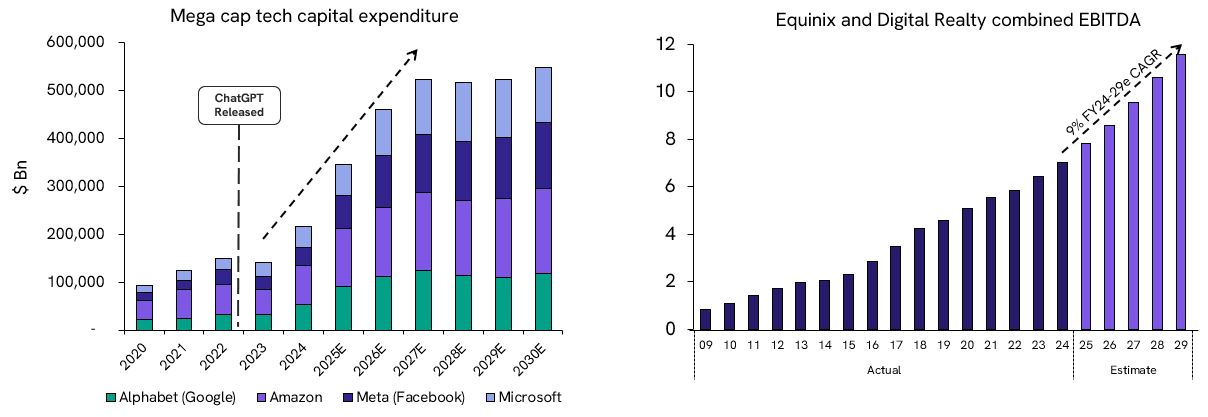
Figure 1: Mega-cap tech capex surge and the rise of data centre profitability3Telecommunication towers are another quiet beneficiary. Global data usage is set to double over the next five years4, driving sustained demand for tower ‘densification’ as mobile penetration deepens. Tower companies typically generate inflation-linked, long-term lease revenues, providing stable and predictable cash flows through economic cycles.
Digitalisation is no longer a niche theme. It is a key component of modern economies, and the physical infrastructure behind it is only just entering a new investment cycle.
What is driving electricity demand?
The growth of the digital economy does not happen in isolation. Every data centre, every tower and every AI workload relies on an increasing amount of electricity. In aggregate this translates into dramatic growth in electricity demand. There are also other sources of demand growth. As figure 2 illustrates, electric vehicles (EVs), air conditioning systems and heat pumps are all also contributing to higher levels of electricity demand. As these trends accelerate, so too does the urgency to build a cleaner, more resilient energy system.
Decarbonisation has become a strategic economic priority for governments, including the UK, for three key reasons: energy security, economic competitiveness and affordability, and net zero targets5.
The ecosystem of electrification
Delivering this electrified future requires coordinated change across four interconnected parts of the energy system. First, generation is shifting away from large fossil-fuel plants to decentralised solar and wind, which are among the most cost-competitive sources of new electricity6. Second, transmission networks face greater pressure, requiring substantial investment to connect new renewable capacity to where demand is growing. Third, consumption is set to accelerate, with UK forecasting demand growth of approximately 30% by 20357. And fourth, flexibility and storage will be critical, with batteries shifting low-cost daytime solar into the evening peak and reducing reliance on fossil-fuel generation.
Managing intermittency: the next challenge
As demand grows, the central challenge is to balance a system where both renewable supply and electricity demand fluctuate significantly. Wind and solar are fast and cheap to deploy, but their intermittency due to fluctuating environmental conditions means evening peaks are still met largely by gas generation. This remains costly, carbon-intensive and leaves the system exposed to global gas markets.
The solution is flexible technologies like battery storage, which shift excess daytime renewable power into the evening. By storing electricity when prices are low and discharging when demand is high, batteries reduce reliance on gas plants and help smooth price volatility.
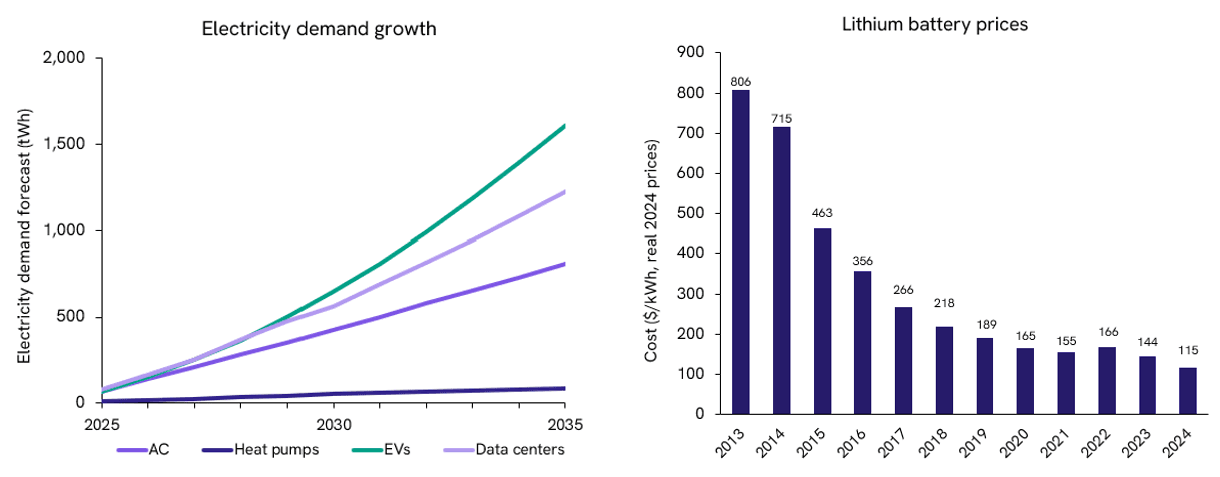
Figure 2: Global electricity demand growth and the fall in lithium battery prices8
Battery storage: unlocking the next phase of the energy transition
For years, critics argued that batteries were too expensive to scale. A decade ago, the numbers justified the scepticism with a lithium-ion battery costing around $800 per kWh. Today, costs have dropped to just $1159 per kWh, making utility-scale batteries economically viable for the first time.
Deployment is accelerating as a result. Several listed companies within our investment universe are positioning themselves as leaders in the supply of battery energy storage. Clearway Energy and Brookfield Renewables, for example, are rapidly growing their US storage pipelines, while Spain’s Grenergy is acting as a first mover in battery deployment across Latin America and Europe. Grenergy expects to scale from virtually 0 MWh of operational storage today to around 18 GWh by 202810 - enough to support over 2 million average European homes for a day and in turn driving substantial, recurring earnings growth for the company.
A rare combination of growth, quality and valuation support
Digitalisation and electrification are not future concepts, they are unfolding now and reshaping the physical foundations of the global economy. At the heart of this transition sit infrastructure assets that are not optional, but essential, providing the critical systems that enable societies and industries to function. Listed real asset businesses stand to benefit directly, supported by asset-backed cash flows, inflation linkage and long-term visibility.
With valuations at multi-year lows despite strengthening fundamentals, we believe listed infrastructure offers one of the most compelling opportunities available to equity investors today.
Risk: The FP Foresight Global Real Infrastructure Fund, the FP Foresight UK Infrastructure Income Fund and the FP Foresight Sustainable Real Estate Securities Fund are Equity funds and the FP Foresight Diversified Real Assets Fund is a Multi-Asset fund. Investors should be willing and able to assume the risks of investing in these funds. The value of an investment and the income from it can fall as well as rise as a result of market and currency movement; you may not get back the amount originally invested. The Funds are actively managed with the UK CPI +3% and the FTSE EPRA NAREIT Developed Net TRI GBP used as comparator benchmarks only.
This is marketing communication. Please refer to the prospectus, supplement and KIID/KID for the funds, which contain full information on the risks and detailed information on their characteristics and objectives, before making any final investment decisions.
Disclaimer: This insight may provide information about Fund portfolios, including recent activity and performance and may contain facts relating to equity markets and our own interpretation. Any investment decision should take account of the subjectivity of the comments contained in this insight. This insight is provided for information only and all the information contained in it is believed to be reliable but may be inaccurate or incomplete; any opinions stated are honestly held at the time of writing but are not guaranteed. The contents of this insight should not therefore be relied upon. It should not be taken as a recommendation to make an investment in the Funds or to buy or sell individual securities, nor does it constitute an offer for sale.