



Net-Zero Carbon data
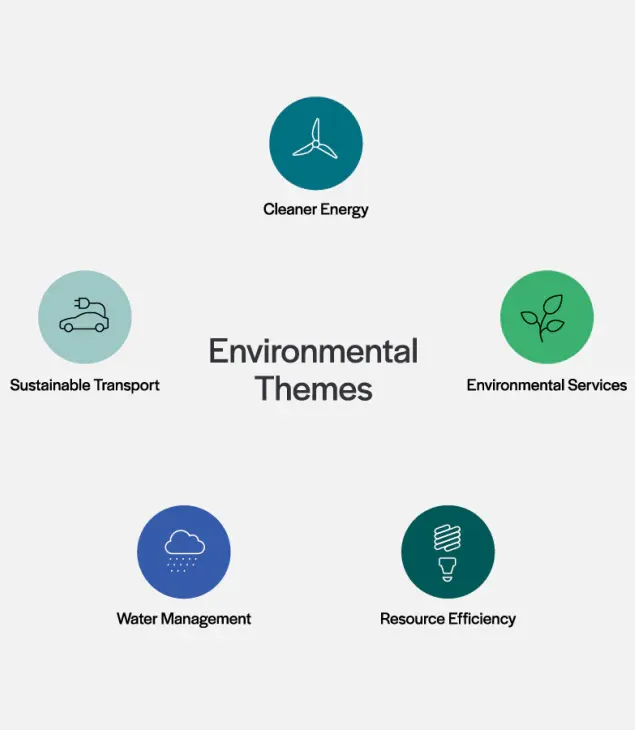
What is Net-Zero-Carbon?
Net-zero carbon (NZC) means reducing all greenhouse gas emissions to as close to zero as possible, with any remaining emissions reabsorbed by natural systems such as oceans and forests. It differs from carbon neutrality, which typically covers only part of a company's operations and accounts only for CO2, rather than all greenhouse gases across the full supply chain.
Why it matters
Limiting global temperature rise to 1.5°C above pre-industrial levels is the threshold scientists identify as necessary to avoid the worst impacts of climate change. The atmosphere is already around 1.1°C warmer than it was in the late 1800s, and emissions continue to rise.
How the funds contribute
Five of the nine investment themes focus on companies whose products and services help other parts of the economy reduce emissions or adapt to climate change. These include manufacturers of renewable energy equipment, components for battery electric vehicles, heat pumps and other technologies that improve energy efficiency and reduce resource use.
Portfolio Scope 1 and 2 emission targets and reductions
The financed emissions associated with the funds, the Scope 1 (direct) and Scope 2 (purchased energy) greenhouse gas emissions of portfolio companies, weighted by the fund's ownership stake, change in two ways: through investment and divestment decisions, and through real-world changes in the annual emissions of those companies.
The reporting is designed to show both dynamics and also discloses the extent to which portfolio companies have set and published net-zero or absolute emissions reduction targets.
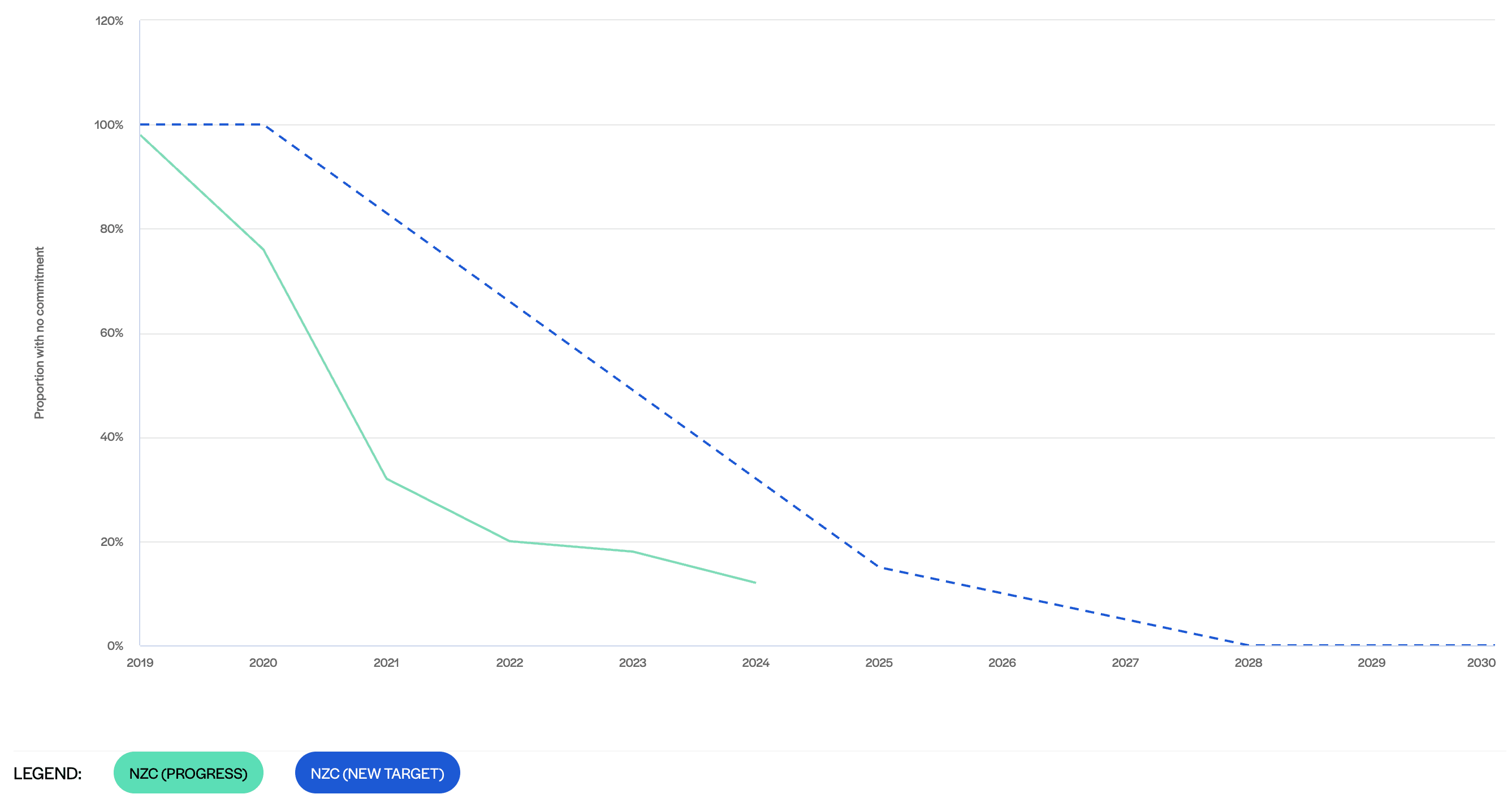
Progress in 2024 was encouraging. By the end of the year, 88% of the Scope 1 and 2 emissions associated with the FP WHEB Sustainability Impact Fund were covered by net-zero targets, up from 82% at the end of 2023 and ahead of the target of 85% coverage by end of 2025. Of those emissions, 65% were covered by a target validated by the Science Based Targets Initiative (SBTi).
FP WHEB Sustainability Impact Fund Net-Zero Carbon targets
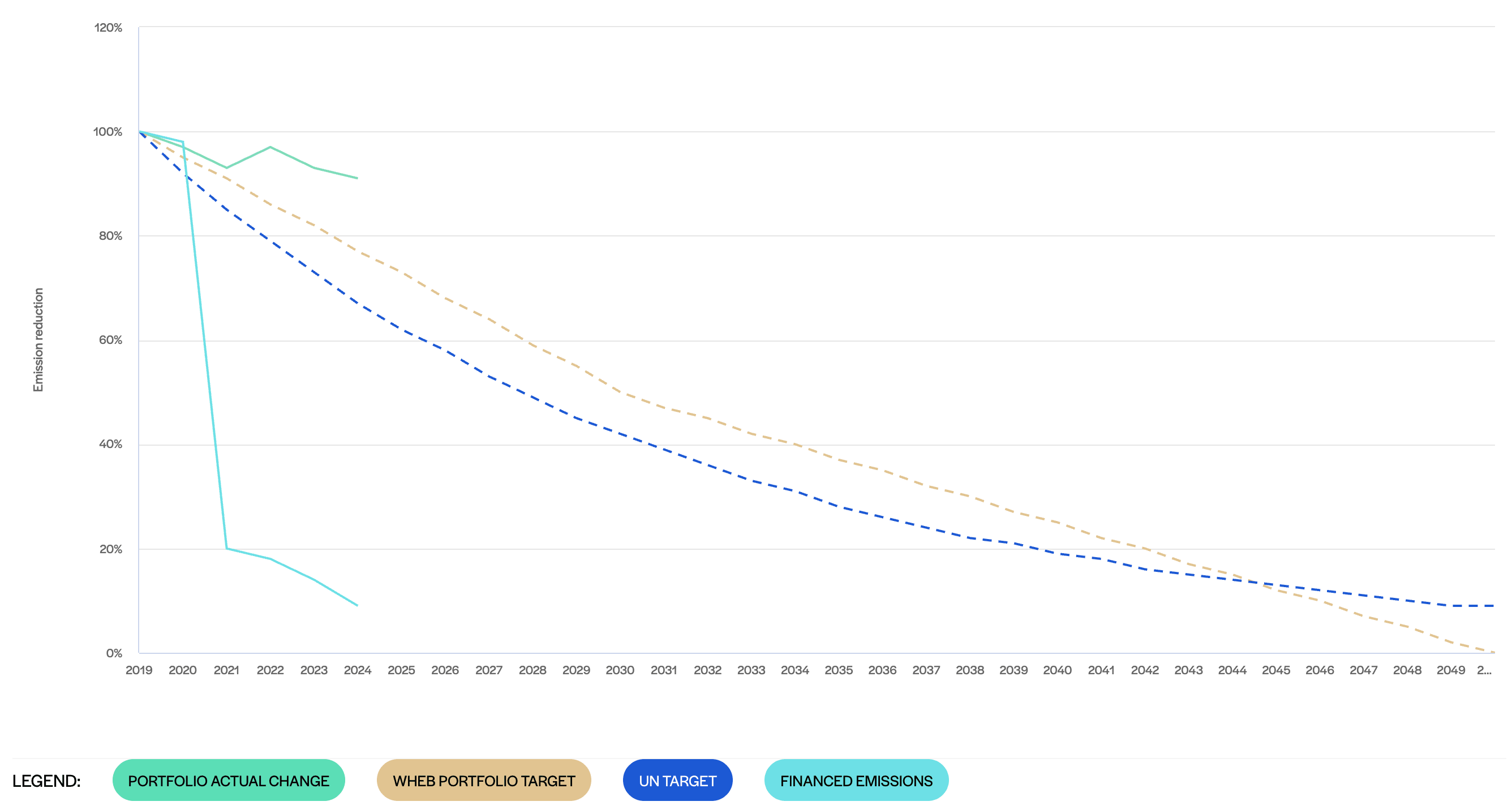
Actual emissions data shows a positive trend that is well ahead of the commitment to reduce Scope 1 and 2 financed emissions by 50% by 2030. Financed emissions are now just 8% of their 2019 level. The majority of that reduction came between 2020 and 2021, driven by the sale of China Everbright Environment Group, a Chinese energy-from-waste business. Further reductions since then reflect a combination of a smaller fund size and lower emissions on a normalised basis. The carbon footprint of the fund fell from 25.16 tCO2e per £1m invested in 2023 to 22.1 tCO2e per £1m invested in 2024.
Of particular note is the further reduction in absolute emissions reported by companies held in the portfolio for the past two years. This figure strips out the effect of buying and selling decisions, and reflects genuine real-world emissions reductions delivered by portfolio companies.
While this progress is encouraging, absolute emissions across the portfolio remain behind the pace required to meet the Paris Agreement goal of limiting temperature rise to 1.5°C. Engagement with portfolio companies on faster emissions reduction will continue.
FP WHEB Sustainability Impact Fund Scope 1 and 2 emission targets and reductions
Portfolio carbon emissions
2020-2024
Even companies providing solutions to climate change generate emissions through their own operations. The investment team engages with portfolio company management to encourage the setting of demanding, time-bound targets to reduce those emissions as quickly as possible.
Over 90% of portfolio companies that have committed to net-zero carbon have had those targets approved, or committed to having them approved, by the Science Based Targets initiative (SBTi).
The thematic structure of the strategy also means the funds have had no exposure to fossil fuel exploration and production since the inception of the current investment strategy in 2012, removing the highest-risk parts of the economy from a net-zero transition perspective entirely.
Scope 1, 2 and 3 emissions data for the full strategy from 2020 to 2024 is set out in the charts below.
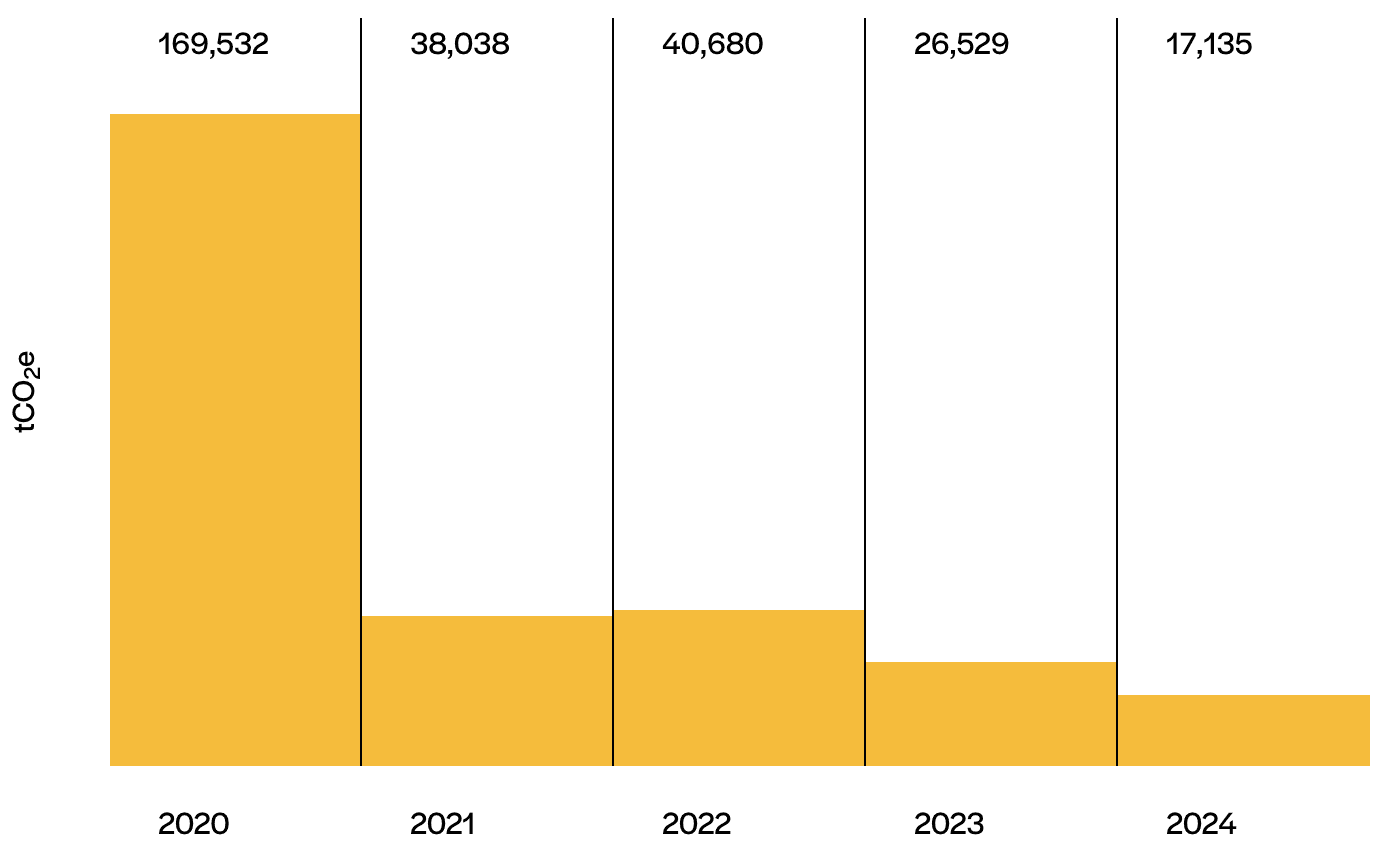
Scope 1 and 2 carbon total footprint (tCO2e) (financed emissions)
Total amount of carbon that is associated with investments in portfolio companies.
Scope 1 emissions - covers emissions from sources that an organisation owns or controls directly.
Scope 2 emissions - are emissions that a company causes indirectly i.e buying energy.
Explanation
Sharply lower due to lower assets under management, sale of Daikin and JB Hunt somewhat offset by purchase of Gerresheimer and lower emissions from Linde.
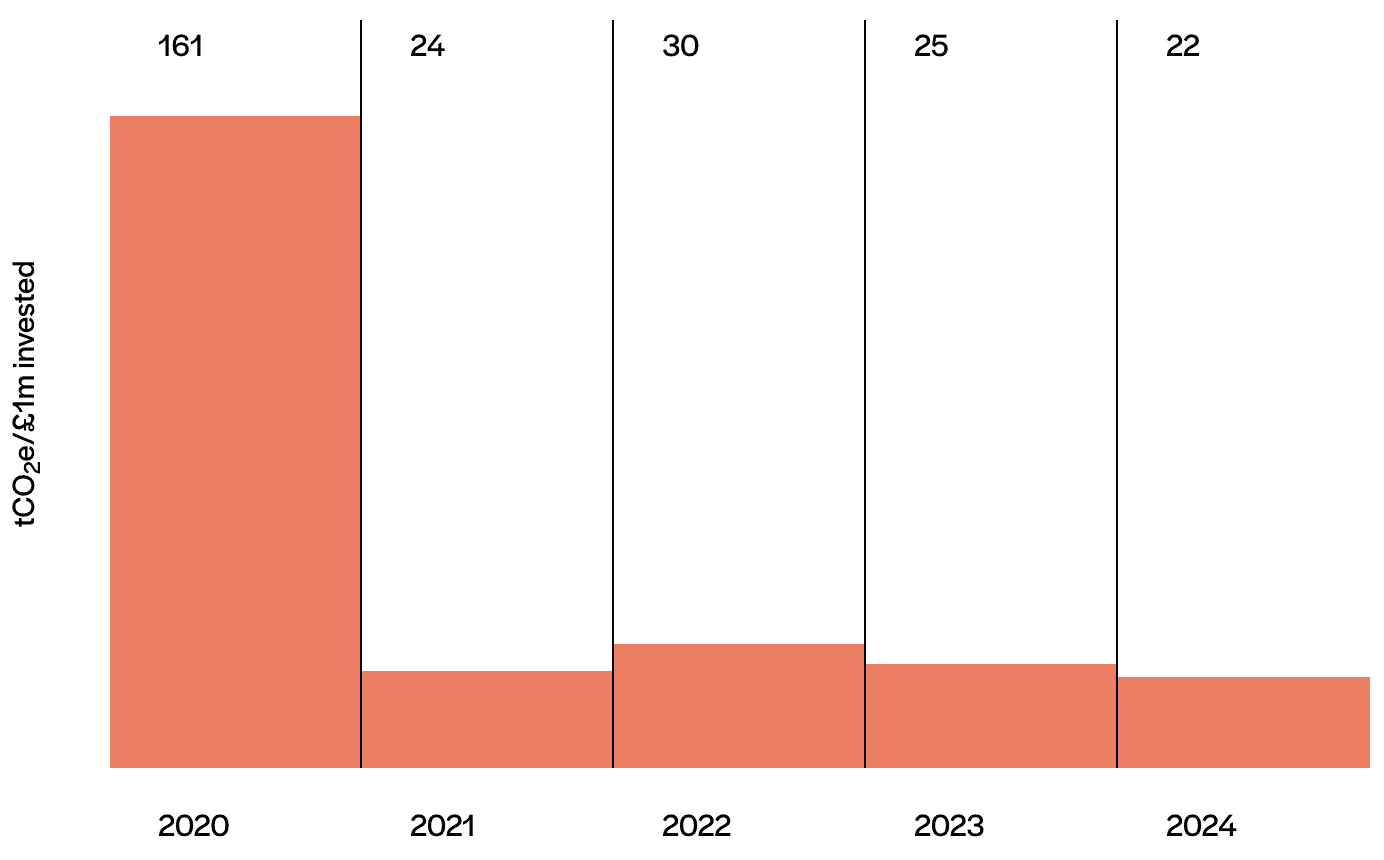
Carbon footprint (tCO2e/£1m invested)
Total carbon emissions for a portfolio normalised by the market value of the portfolio.
Explanation
Smurfit Westrock increased with acquisition of Westrock but offset by sale of JB Hunt and reduced contribution from Linde and Advanced Drainage Systems.
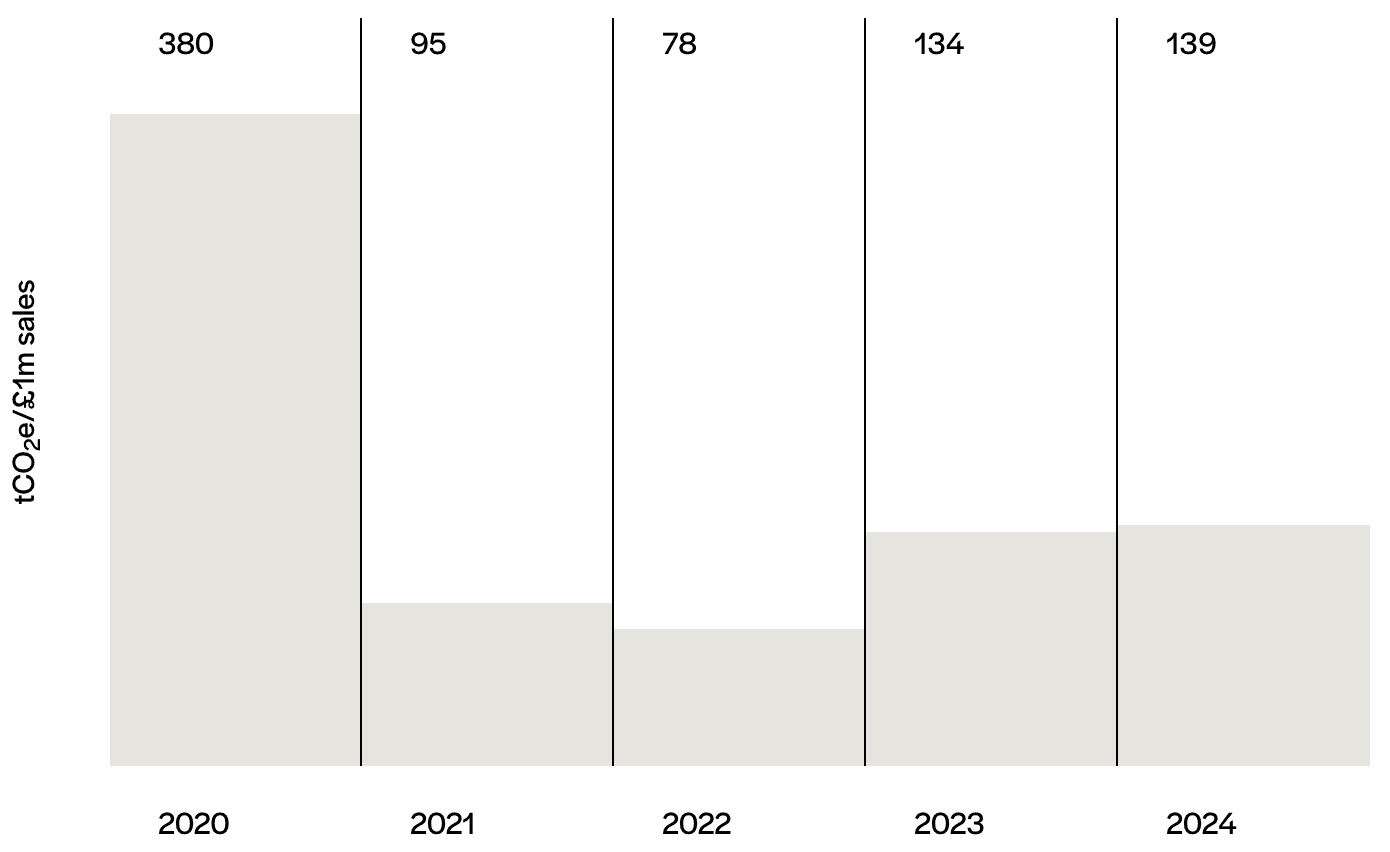
Carbon intensity (tCO2e/£1m sales)
Measure of average carbon intensity of investee company operations.
Explanation
Increased intensity from all large emitters and new holdings in Gerresheimer and American Water Works only partially offset by sale of JB Hunt.
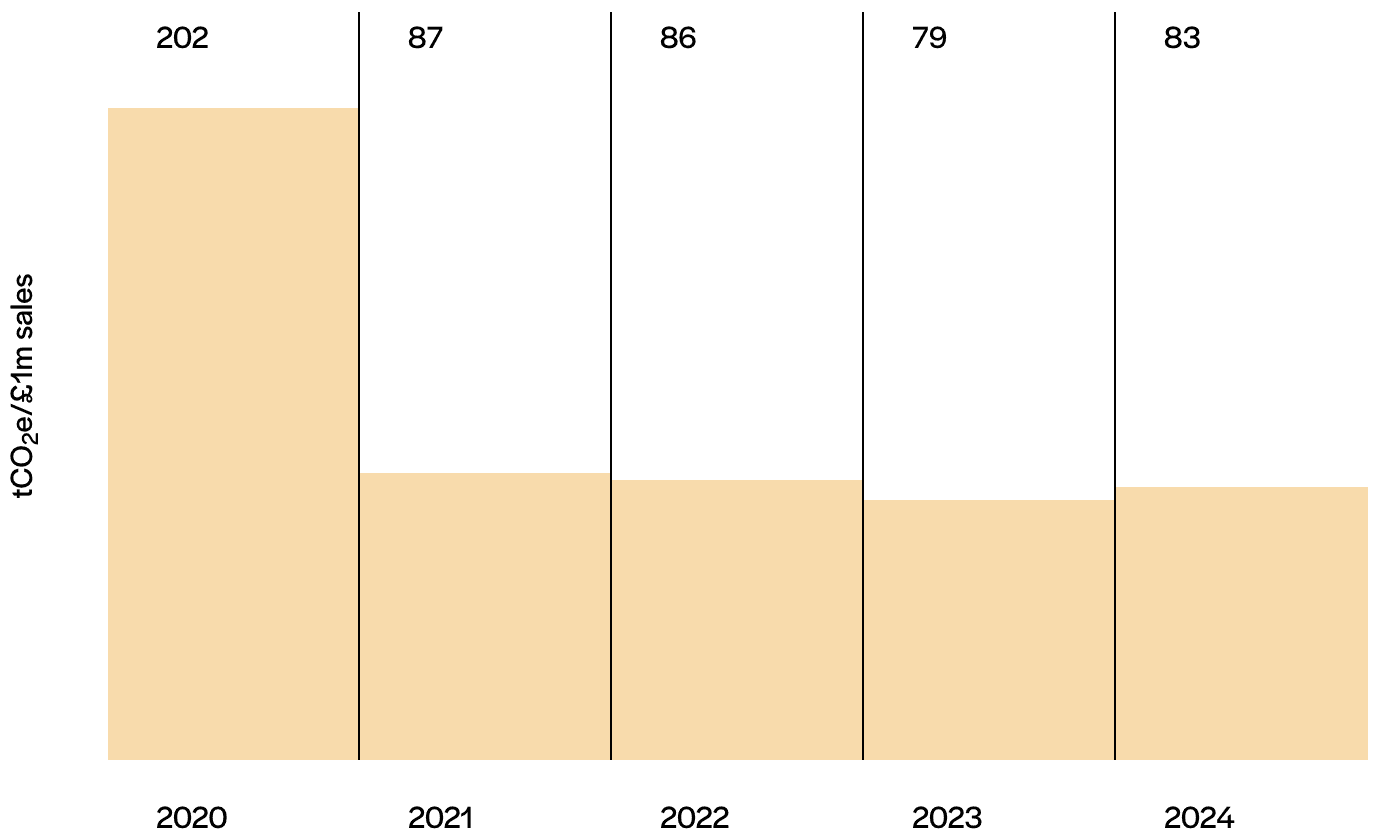
Weighted average carbon intensity (tCO2e/£1m sales)
Measure of a portfolio’s exposure to carbon-intensive companies by including the portfolio weighting in carbon-intensive companies.
Explanation
As above with increased intensity from all large emitters and new holdings in Gerresheimer and American Water Works only partially offset by sale of JB Hunt.
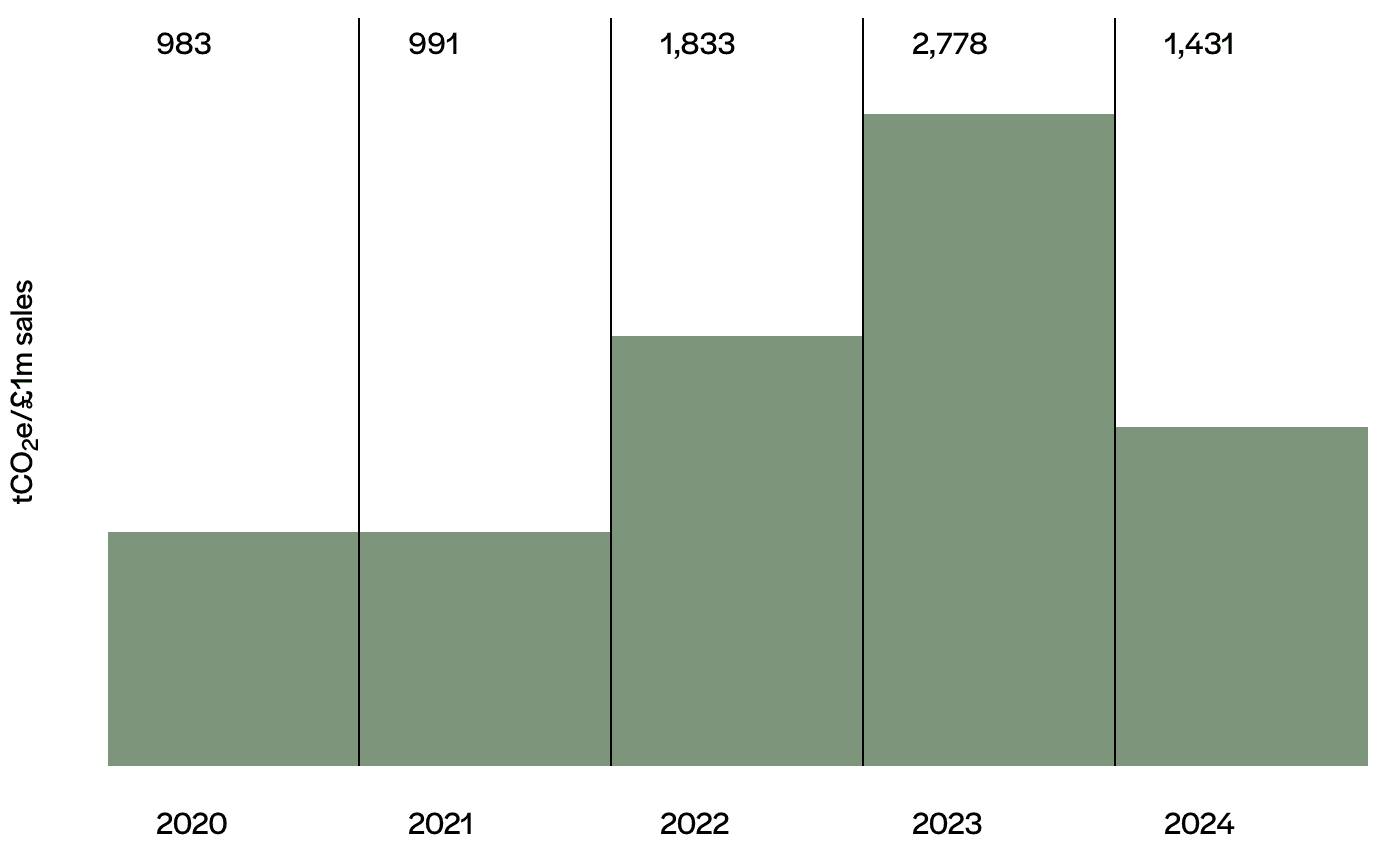
Scope 3 carbon total emissions (tCO2e/£1m sales)
Measure of the carbon intensity of the whole value chain (incl. product) emissions.
Scope 3 emissions - are emissions that are not produced by the company itself and not the result of activities from assets owned or controlled by them. Scope 3 emissions include all sources not within the Scope 1 and 2 boundaries.
Explanation
Sale of Daikin substantially reduces Scope 3 emissions. Trane and Xylem also reduced emissions substantially.
Latest insights



Stay ahead of the market
Receive fund updates, market insights and event invitations straight to your inbox